
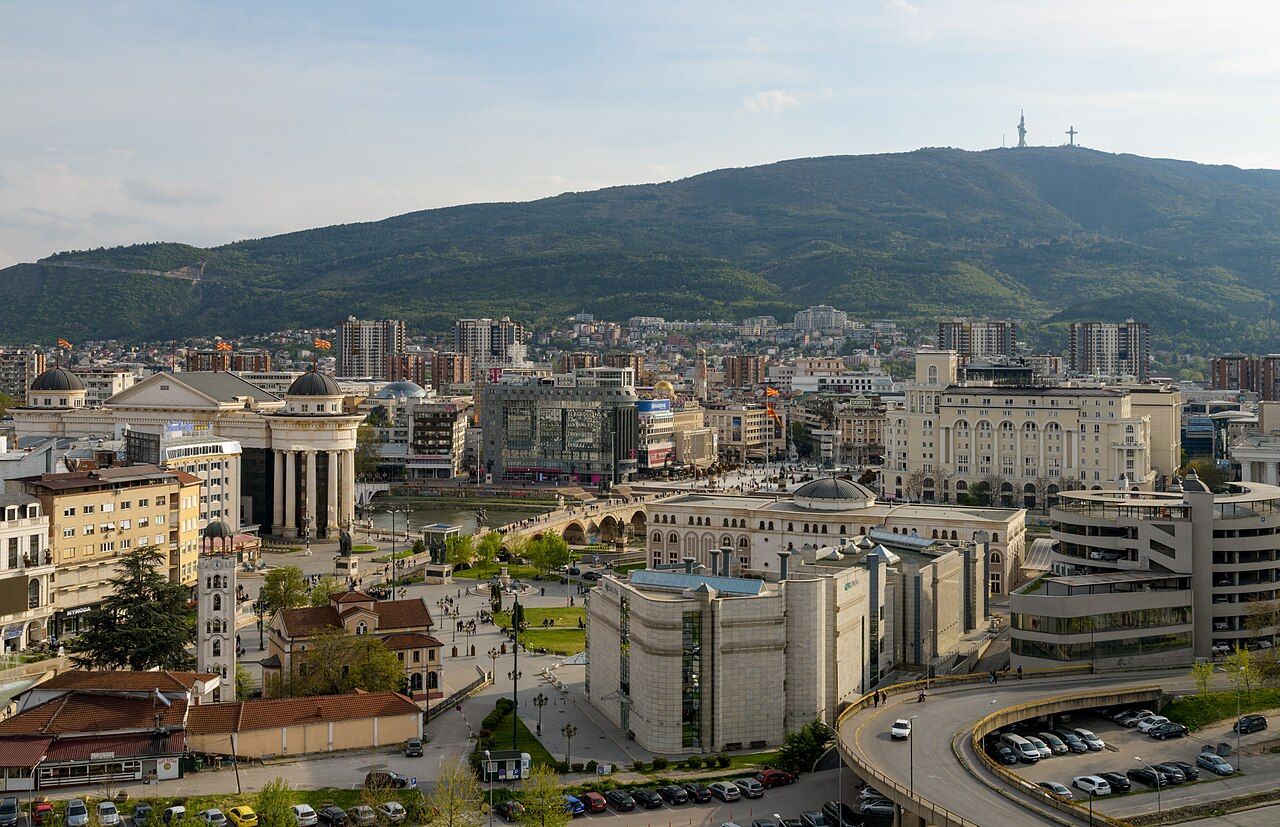
Skopje, the capital of North Macedonia, lies a short bus ride south of Pristina, and it makes an easy first step if you are heading on towards Ohrid or Greece. The city sits on both banks of the Vardar river, below the forested slopes of Mount Vodno. On one side spreads a monumental centre rebuilt in the last two decades; on the other, the lanes of one of the largest old bazaars in the Balkans.
You can see the main sights in a long day, but a night lets you add Matka Canyon and enjoy the riverside in the evening.
The Stone Bridge and the river
The Stone Bridge is the city's emblem, a low stone arch bridge across the Vardar that dates back to the Ottoman period and probably has older foundations. It links Macedonia Square on the south bank with the Old Bazaar on the north, so you will cross it more than once. Early morning and late evening are the best times to walk it, when the crowds thin and the light falls along the river.
The Old Bazaar
North of the bridge, the Old Bazaar is a maze of low stone buildings, workshops and small squares. Mosques, Ottoman-era inns built around courtyards and an old covered market sit among jewellers, tailors and grill houses. The Mustafa Pasha Mosque stands on the slope above, and the fortress known as Kale crowns the hill next to it, with free entry and good views over the river and the centre.
Eating in the bazaar is good value. Grilled meat with bread and onions, bean dishes and pastries are all common, and prices are generally lower than on the main squares across the river. Shop around and look at what locals are eating before you sit down.
The bazaar is also a good place to slow down. Step into the courtyards of the old inns, where cafés and small galleries now occupy the arcades, and look out for the old bathhouses, some of which are now used as galleries. Visitors are welcome at the mosques outside prayer times if they dress modestly.
The statues, told plainly
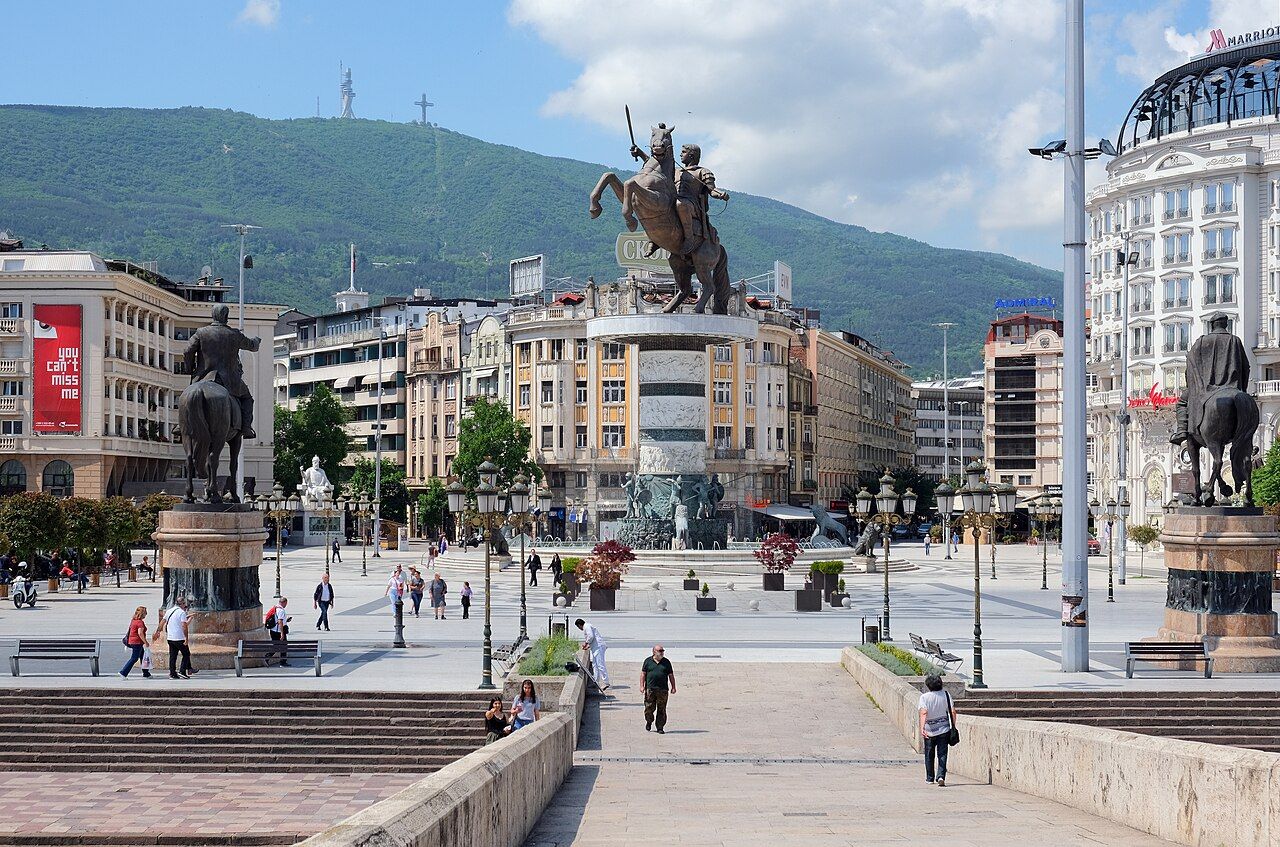
Back on the south bank, the centre is crowded with large statues, fountains, bridges and new buildings with classical columns and facades. Most of this comes from a government building programme known as Skopje 2014, carried out mainly in the 2010s. The centrepiece of Macedonia Square is a large equestrian figure officially titled Warrior on a Horse, widely understood to represent Alexander the Great.
The programme was popular with some residents and criticised by others, over its cost, its style and the history it chose to celebrate. You do not need to take a side to enjoy a walk through it. Treat it as part of the city's story and look at it with your own eyes.
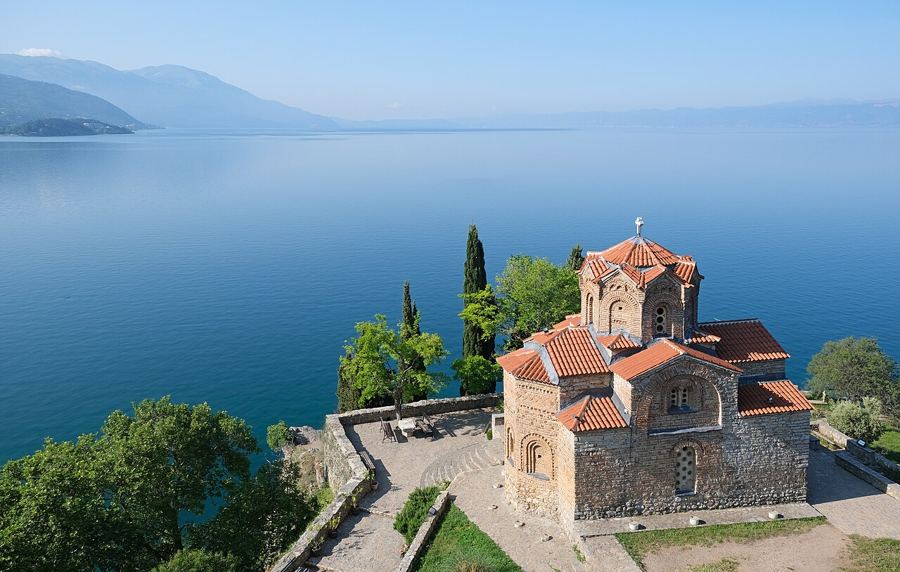 Change here for OhridLake Ohrid's churches and shore
Nearby, the Memorial House of Mother Teresa marks the city where she was born in 1910. It is a small, quiet museum and an easy stop between the square and the river.
Further along the south bank, the river promenade is lined with new bridges decorated with statues, and the riverside is pleasant in the evening when the heat drops. The city centre is flat, and you can walk between all the main sights quickly, though in midsummer Skopje is often one of the hottest cities in the region.
Matka Canyon
About half an hour south-west of the city, the Treska river runs through Matka Canyon, a steep, wooded gorge with a dam and a lake. A path follows the water along the cliffs, and small boats and kayaks are available for hire in season. A medieval monastery church stands near the start of the walk.
City buses run from the centre towards Matka, but timetables vary, so check at a stop or ask locally. Go early on summer weekends, when the canyon gets busy, and bring water and good shoes for the path.
If the path is crowded near the dam, keep walking. The trail continues along the cliffs for some distance, and after the first stretch the number of people drops quickly. Inside the canyon there are caves, some of which can be visited by boat in season. Rules and access change, so ask at the start of the walk.
Getting there and back
Buses run between Pristina and Skopje through the day, usually taking around two hours depending on the border. The crossing between Hani i Elezit and Blace is busy at times, especially in summer and around holidays, when queues can add a lot to the journey. Carry your passport, keep your bus ticket and check current entry rules before you go, since they can change.
North Macedonia uses the denar, not the euro. Cash machines are easy to find in the centre, and some places near the bus station accept euros at their own rate, so a small amount of local cash is the simplest choice.
Inside the city, most sights are within walking distance of each other. City buses and taxis are cheap for longer trips, including to the main bus station, which sits east of the centre beside the railway station. Keep a little time in hand on your last day so that you are not rushing for the bus back to Pristina.
Where Skopje fits in
Many travellers treat Skopje as a stop on a loop: Pristina, Skopje, then south to Ohrid, and back into Kosovo or on into Albania. If you have only a weekend, Skopje alone is a worthwhile change of scene after a day in Pristina. If you have longer, continue to Lake Ohrid and its churches, and consider crossing to Tirana before heading home through the mountains.