
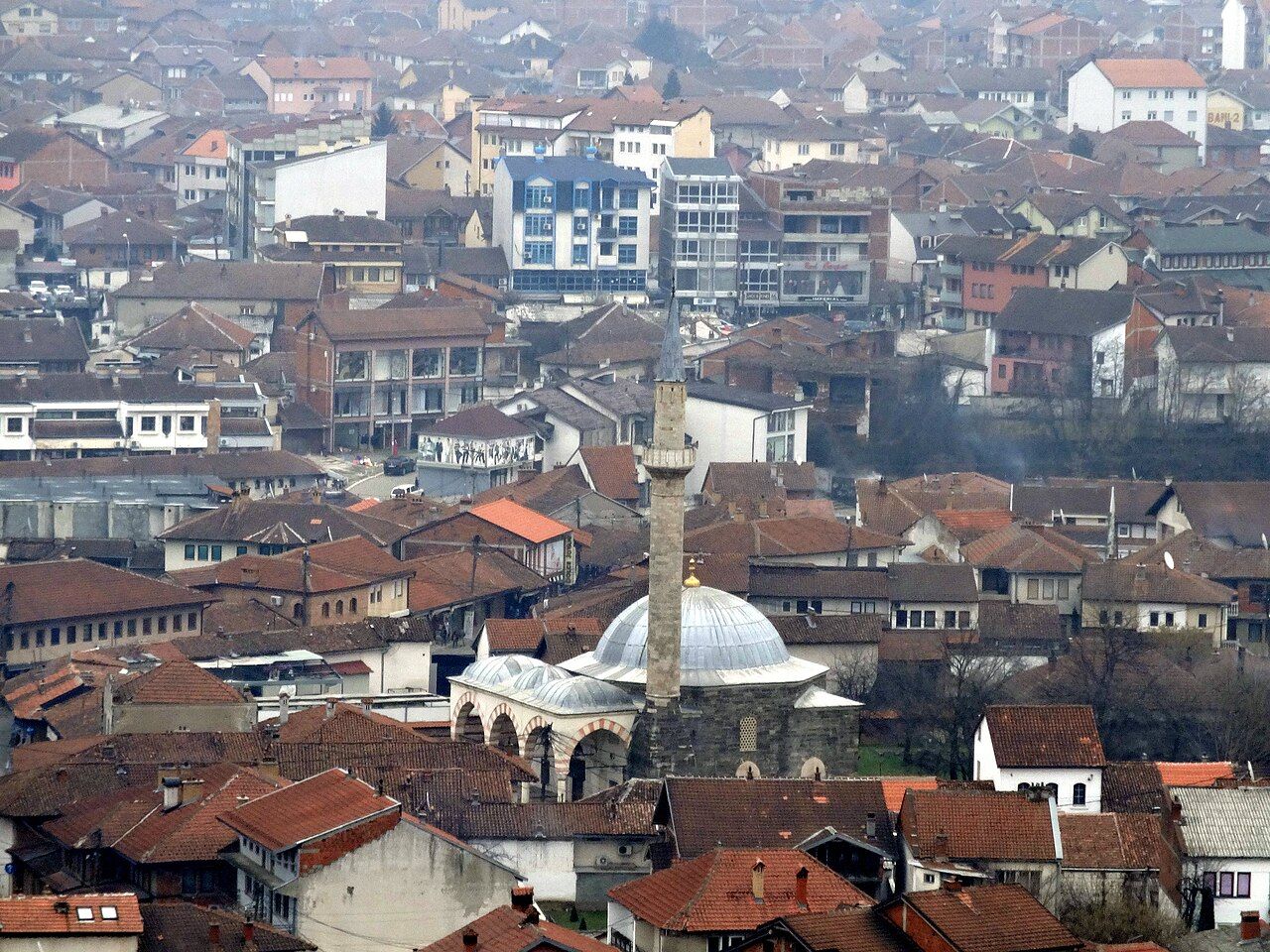
Gjakova (Đakovica in Serbian) is a mid-sized town in southwest Kosovo, between Peja and Prizren. It gets fewer visitors than either, which is part of its appeal. At its heart is the Çarshia e Madhe, the Grand Bazaar, one of the longest old market streets in the region: a cobbled lane lined with low wooden-fronted shops, mosques and cafés. Around it you find Ottoman-era religious buildings, and a short distance outside town an elegant stone bridge. You can see it all in a day, cheaply and at a gentle pace.
The Grand Bazaar
The bazaar grew up in the Ottoman period as a centre for trade and crafts, with separate sections once given over to tailors, saddlers, silversmiths and other trades. Much of it was burned during the 1998-99 war, and it was rebuilt in the following years, largely in its traditional style. The result is a long street of single- and two-storey shops with overhanging roofs and wooden shutters, many of which open fully to the street during the day.
Today the bazaar mixes old and new. Some shops sell traditional crafts, such as woodwork, filigree jewellery, carpets and the white felt caps (plis) worn by older Albanian men; others sell clothes, phones or souvenirs. Cafés spill onto the cobbles, especially in the evening, when the street becomes one of the most sociable places in town.
- Walk the whole length, then come back the other way; you notice different details each time.
- Look up at the roofs and wooden eaves, and down at the smooth river-stone paving.
- If you buy crafts, ask whether they are made locally; many workshops are happy to explain.
The Hadum Mosque
At the top of the bazaar stands the Hadum Mosque, built in the late sixteenth century and named after its founder, Hadum Sylejman Efendi. It is one of the oldest and most important buildings in town, with a slender minaret, a dome and a covered porch topped with small domes. The interior has painted decoration, and the courtyard holds a library and old tombstones.
The mosque usually opens its doors to visitors between the daily prayers. Dress modestly, remove your shoes at the door, and for women a scarf is a good idea. Be quiet and avoid walking in front of anyone praying.
Gjakova is also known for its Sufi heritage. Several tekkes (Sufi lodges) belonging to different orders stand in and around the old town; some may be visited respectfully, but they are places of worship, so ask before entering.
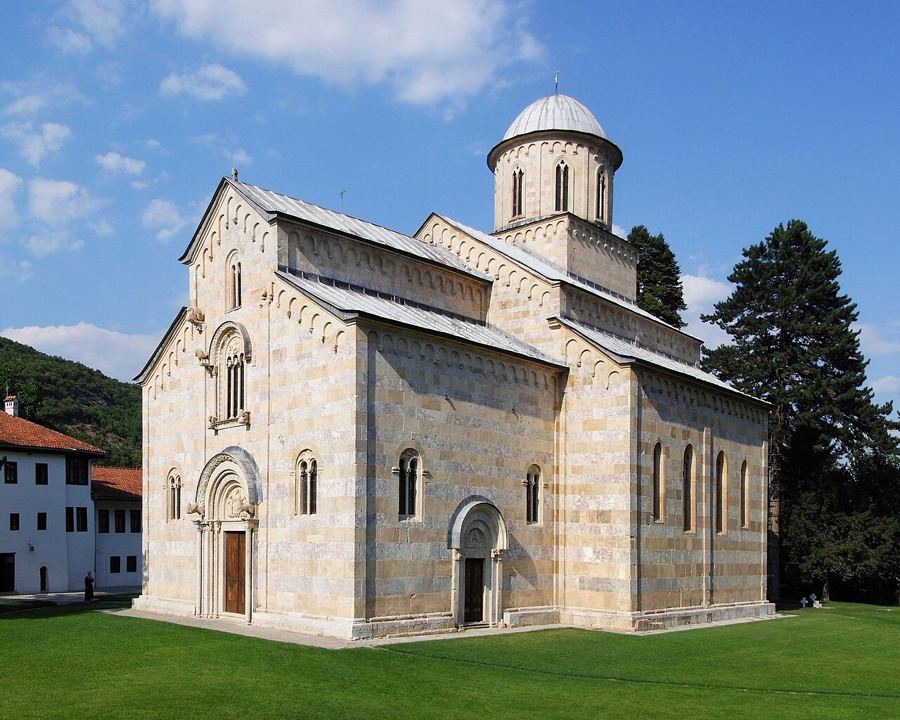 Change here for DeçanVisoki Dečani, the painted monastery under the mountains
The Terzive Bridge
A few kilometres outside the centre, the Ura e Terzive, the Tailors' Bridge, crosses the Erenik river. Built in the Ottoman period, probably in the eighteenth century, it is a long stone bridge of many arches, with a gently humped profile that rises and falls across the riverbed. It is said to take its name from the tailors' guild that paid for its repair, a story that fits the town's history of crafts.
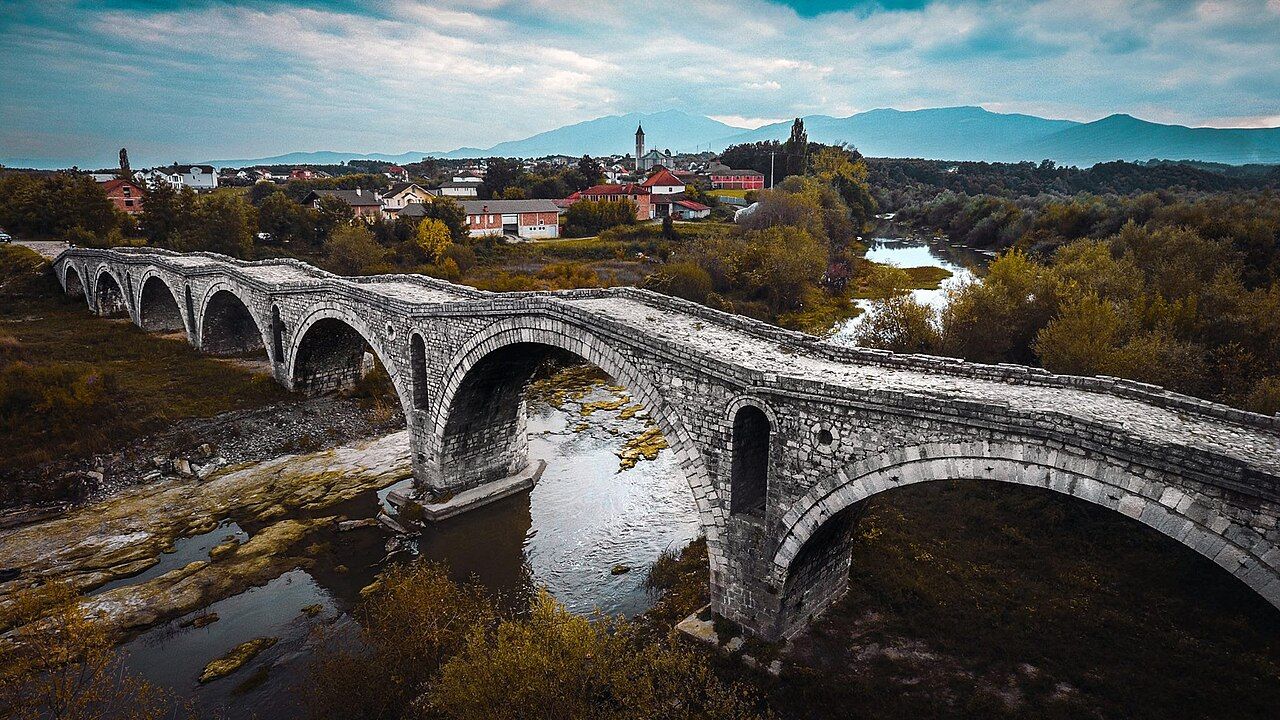
The bridge has been restored and is a lovely place for a short walk, especially in the soft light of late afternoon. In summer the river can run low, revealing the stone bed and pools. Wear shoes with good grip if you plan to scramble down to the water.
To get there, take a taxi from the centre, or walk if you have the time and a map; part of the route follows busy roads, so take care. Agree the fare and waiting time in advance if you take a taxi.
Evenings in Gjakova
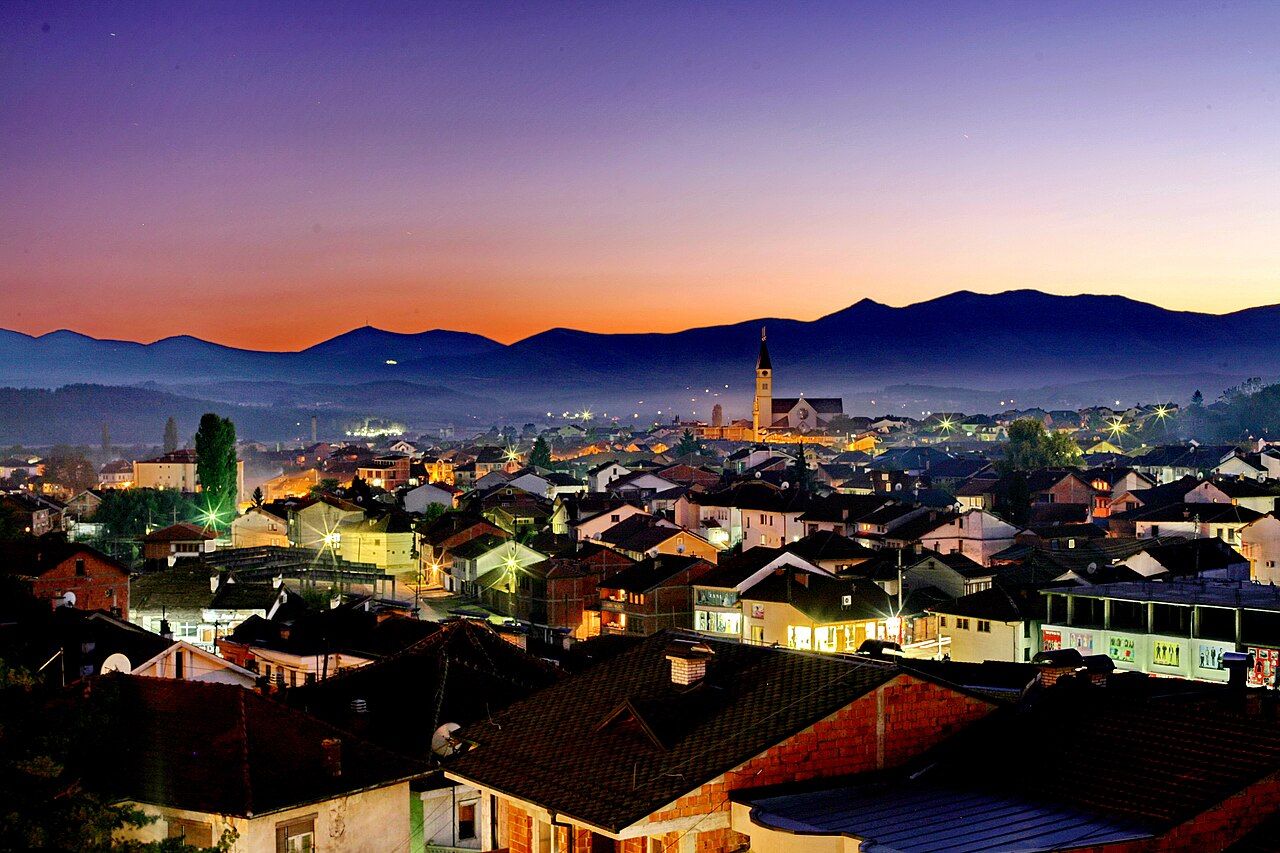
Gjakova has a lively café culture, and in the evening the bazaar and the streets around it fill with people. Sit with a coffee and watch the town drift by. As the light fades, the view across the rooftops from higher ground is worth looking for, with church towers and minarets rising from the houses and mountains on the horizon.
Food is inexpensive. Bakeries sell burek and pite in the morning, grills serve qebapa and salads, and you may find tavë or flija if you look. Our guide to eating well and cheaply in Kosovo has more ideas.
Getting there and around
Buses connect Gjakova with Pristina (around two hours), Peja and Prizren (each about an hour), and other towns. The bus station is close enough to the centre to walk. Departure times move with the seasons, so ask at the bus station the day before.
The old town is compact and easily walkable. Only the Terzive Bridge needs a ride for most visitors.
Gjakova fits neatly into a western Kosovo loop. From here, head north to Peja, visit Visoki Dečani on the way, or continue south to Prizren's old town. The Mirusha waterfalls are also within reach for a cool swim in summer.
A simple plan for the day
Arrive in the morning and start with the bazaar while the shops open and the street is calm. Visit the Hadum Mosque before midday, then have a long, cheap lunch near the bazaar. In the afternoon, take a taxi out to the Terzive Bridge for the light, and return for the evening café hour in the old town. If you stay overnight, the next morning is a good time to catch a bus onward.
A note on history
Gjakova was hit hard during the 1998-99 war, and you may see memorials around town. Talk about the past only if someone else raises it, and listen with care. Most people are happy to talk about the bazaar, their crafts and their town today, and you will find them welcoming.