
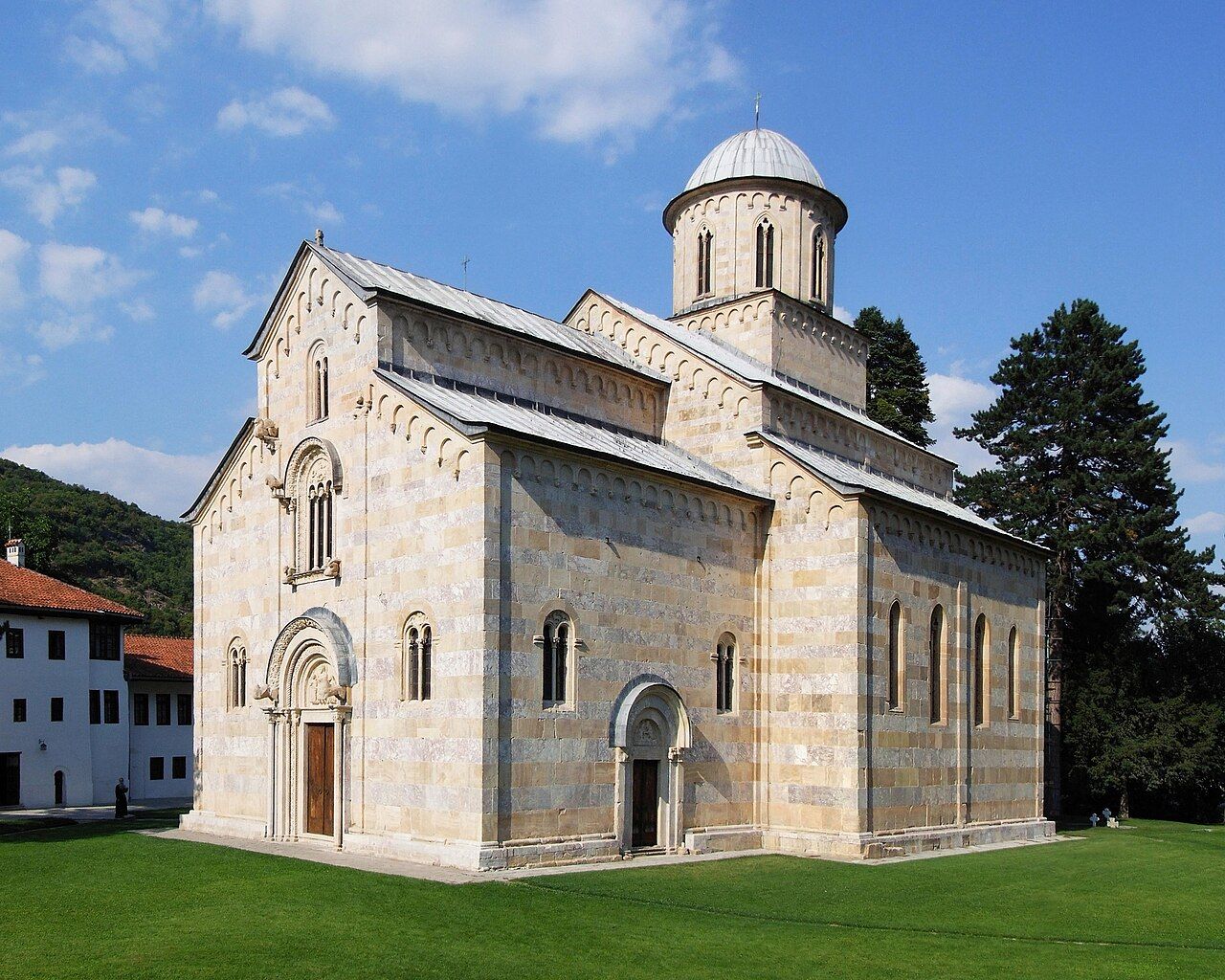
Visoki Dečani is one of the finest medieval buildings in the Balkans. The Serbian Orthodox monastery stands in a quiet valley at the foot of the mountains, a couple of kilometres from the town of Deçan (Dečani in Serbian), in western Kosovo. Its church, built of pale stone in alternating bands, holds one of the largest and best-preserved collections of Byzantine-era wall paintings anywhere. Visiting takes a little preparation, mainly because of security arrangements, but the effort is repaid many times over.
A royal foundation
The monastery was founded in 1327 by the Serbian king Stefan Uroš III, known as Stefan Dečanski after this very place, and was completed in the 1330s under his son, Stefan Dušan. Its church, dedicated to Christ Pantocrator, was designed by a master builder from Kotor on the Adriatic coast, which helps explain its unusual look: the exterior blends Romanesque and Gothic touches with the Byzantine plan typical of Serbian churches of the time.
The monastery has been in continuous use for most of its long history, and a community of monks lives there today. In 2004 it became the first site in Kosovo to join UNESCO's World Heritage List, later forming part of the listing called the Medieval Monuments in Kosovo, which is also on the List of World Heritage in Danger.
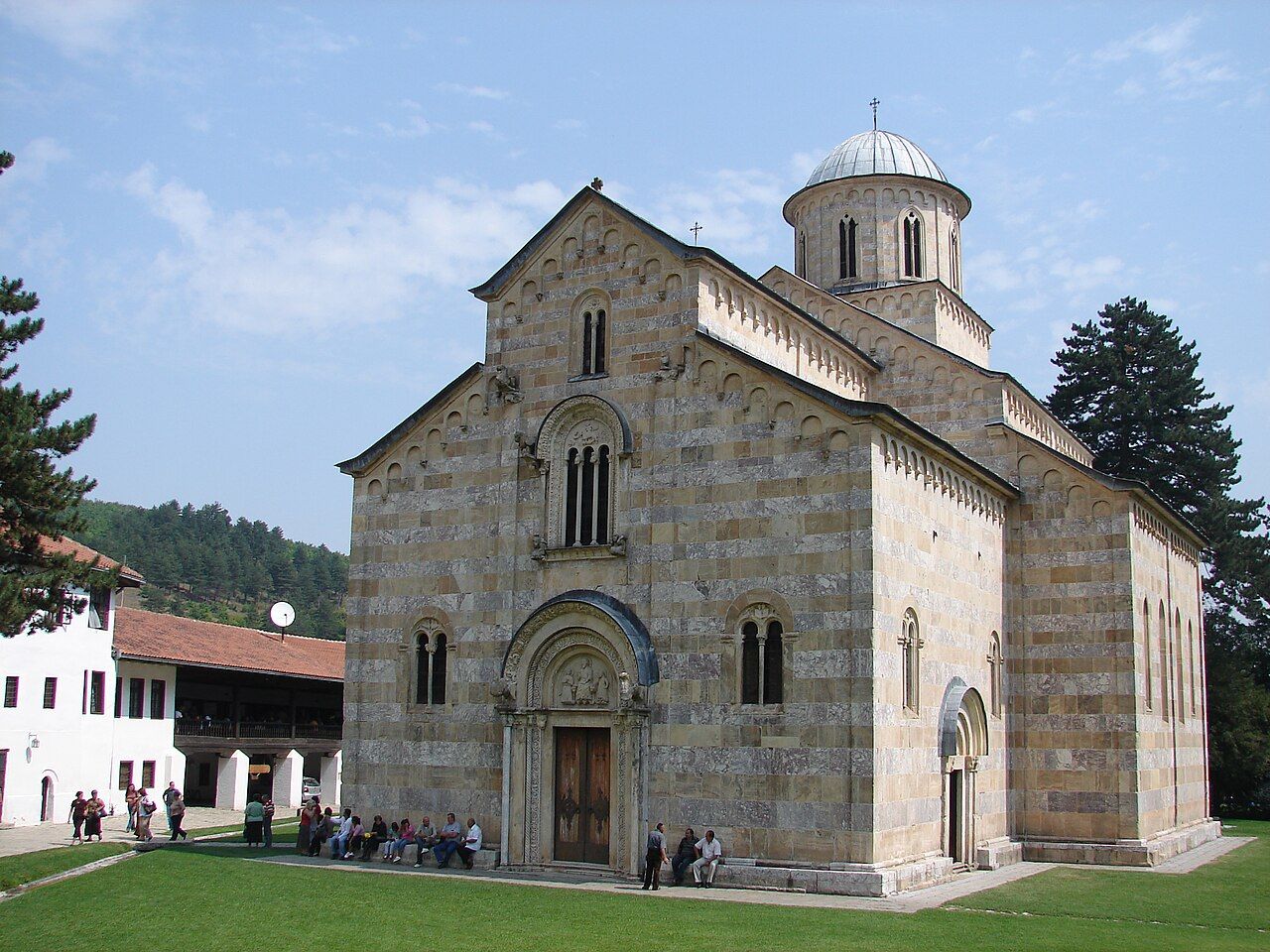
The frescoes
Step inside and the scale of the painting becomes clear. Nearly every wall, pillar and vault is covered in frescoes, painted in the fourteenth century and showing thousands of figures: saints, scenes from the life of Christ, Old Testament stories, church councils and a family tree of the royal dynasty. Some cycles are rare in Byzantine art, and art historians regard the whole as one of the most complete painted programmes of its era.
The light inside is low, so give your eyes a few minutes to adjust. Walk slowly, look up, and pause at the carved stone portals, which are works of art in their own right. Photography inside is usually not permitted.
Visiting with ID and respect
Visoki Dečani has a special protected status, with a defined protective zone around it, and it has had a security presence for many years. At different times this has included international KFOR troops and the Kosovo Police. Arrangements change, so treat the following as general guidance and check current rules before you go.
- Bring ID. Carry your passport or national ID card. You will probably need to show it at the checkpoint before the monastery, and you may be asked to leave it there while you visit.
- Dress modestly. Long trousers or a long skirt and covered shoulders. Women may be asked to cover their hair, so bring a scarf.
- Follow instructions. Do what guards and monks ask, without argument. Do not photograph security personnel or checkpoints.
- Be quiet. This is a working monastery. Keep voices low, and step aside if a service is in progress.
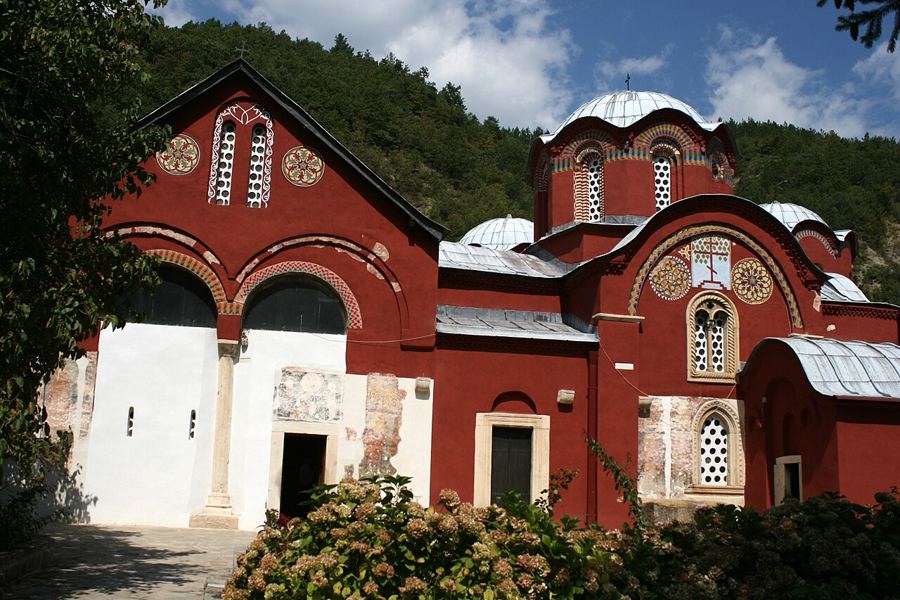 Change here for PejaPeja and the Patriarchate of Peć, where the mountains begin
The setting and the town
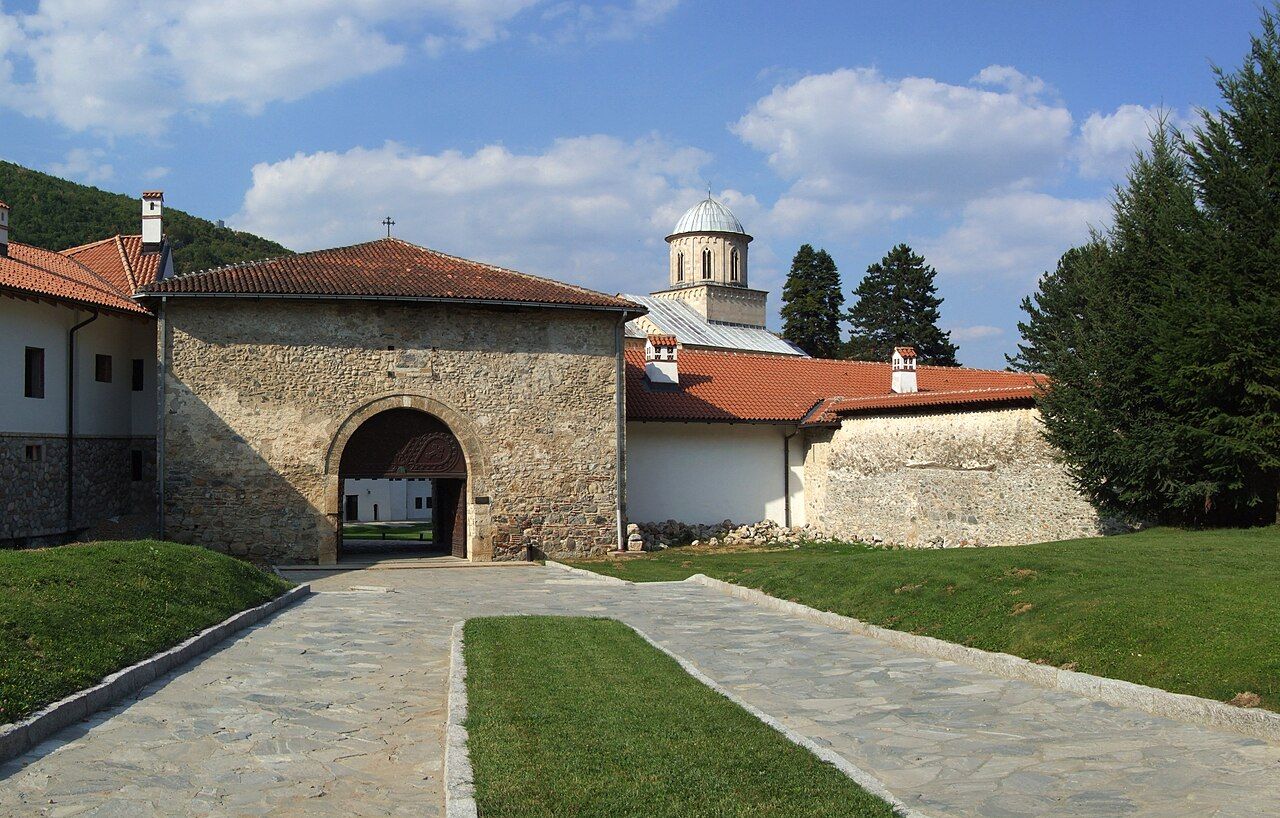
The monastery sits where the Deçan river leaves its gorge, surrounded by chestnut and pine forest, with mountains rising behind. The grounds are calm and green, and the walk up from town on a quiet road through fields and woods is pleasant in good weather.
The town of Deçan is small and mostly Albanian-speaking, with a few shops, bakeries and grills along the main street. In recent decades the town and the monastery have had a difficult relationship, and questions about the protected zone and property have been debated. As a visitor, there is no need to take sides: be polite in both places, and leave politics out of conversation.
Above the town, the Deçan gorge leads into the mountains, with walking trails and swimming spots in the river in summer. It makes a good add-on if you have extra time.
Getting there
Deçan lies on the main road between Peja and Gjakova, and buses between those two towns pass through regularly. From Peja the ride takes around half an hour; from Gjakova it is a little longer. From Pristina, change at Peja or look for direct services. Departure times move with the seasons, so ask at the bus station the day before.
From the town centre to the monastery is a walk of roughly half an hour, or a short taxi ride. There is no regular bus to the gate itself.
Many travellers visit Dečani as a half-day trip from Peja, combining it with the town's own monastery, the Patriarchate of Peć. If you are heading south, continue to Gjakova's old bazaar, which is an easy bus ride away.
How long to stay
Allow an hour or more inside the monastery grounds, longer if you want to study the frescoes properly. Add the walk to and from town, and any time at the checkpoint, and the visit becomes a comfortable half-day. Mornings are often quieter, and the light on the marble walls is soft and warm late in the afternoon. In the main summer season, more visitors arrive, including organised groups, so an early start helps.
If you have a little longer, walk a short way up the gorge behind the monastery, or relax at a café in town before the bus back.
A short checklist
- Passport or ID card, in your pocket, not your bag at the hotel.
- Clothes covering shoulders and knees, plus a scarf.
- Cash for bus fares and perhaps a donation or a candle.
- Patience for the checkpoint, and time to look properly inside.
For context on the wider region and its past, our brief, careful history of Kosovo may help. Then simply go and look; few buildings in Europe hold this much medieval painting in one place.