
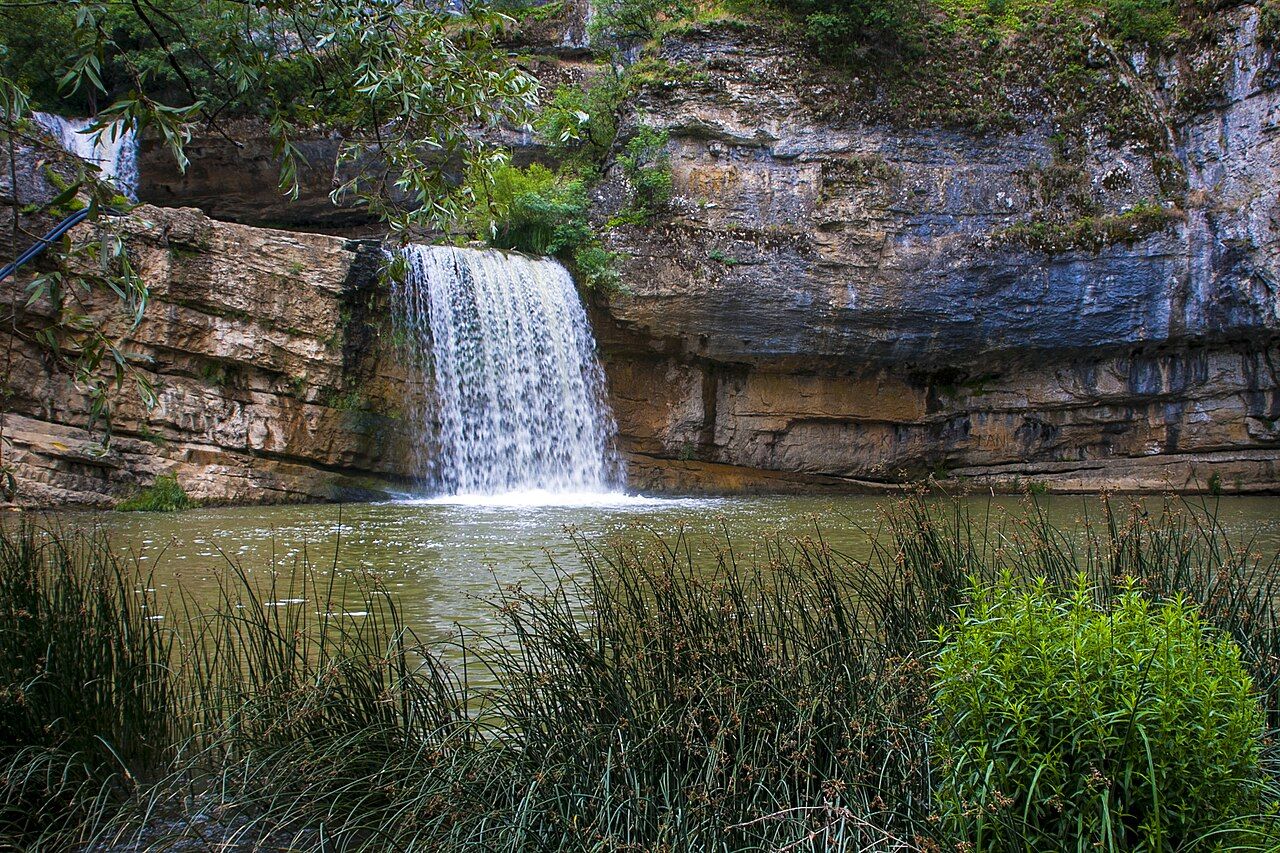
West of Pristina, the Mirusha river has cut a narrow limestone canyon through farmland between the towns of Klina and Malisheva. Inside it sits a chain of waterfalls and pools, each one spilling into the next, protected as a natural monument. It is one of the easiest wild places in Kosovo to reach on a small budget: there is no permit to buy, you need no gear beyond decent shoes, and most fit travellers can see the lower falls in a morning.
It is also a place that rewards a little caution. The rock is slippery, the pools are deep in places and there is no one watching the water. Read the notes below on footing and swimming before you go, and you will enjoy it far more.
What you find in the canyon
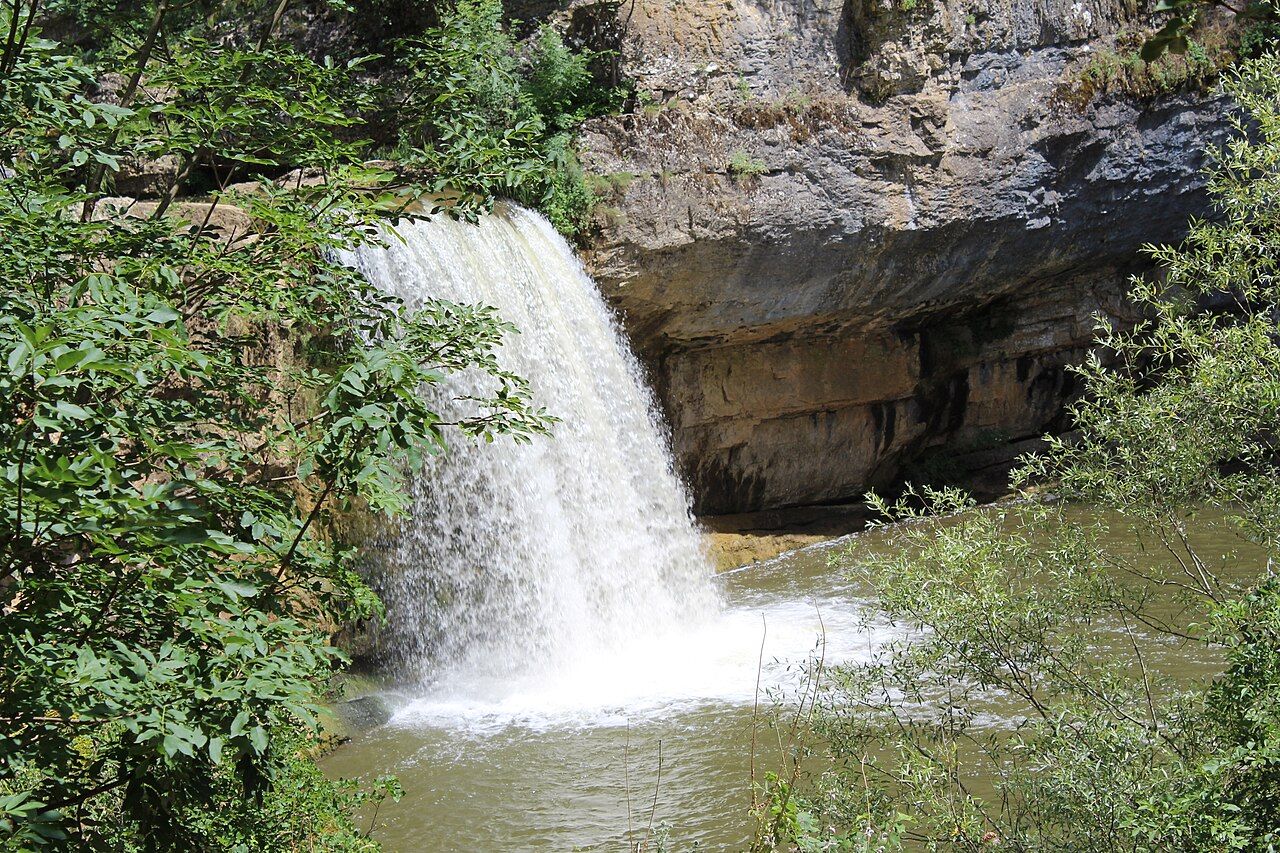
The river drops through a long staircase of steps. Expect around a dozen lakes joined by falls of different heights, from low cascades you can step across to a tall curtain of water that fills a round, cliff-walled basin. The lower pools near the usual way in are the broadest and the most visited. Higher up, the canyon narrows and the going turns into scrambling over boulders and ledges.
The walls are pale limestone, undercut into overhangs and shallow caves where the water has worked at the rock for a very long time. Willows and reeds grow wherever there is soil, so in summer the whole place feels green and shaded even when the fields above are dry and brown.
The walk in and the footing
From the road at the top of the canyon, a path leads down to the lower falls. It is short but steep in places, with loose gravel and rock steps, so take it slowly on the way down. Sandals with straps or light trail shoes are better than flip-flops, which slide on the polished stone.
Beyond the first pools there is no proper trail. To go upstream you pick your way along ledges, wade through shallow water and climb around the sides of the falls. The limestone near the water is often coated with a thin, slick film that is hard to see, so test each step. If you are on your own, stay near the lower pools and let someone know where you are. Mobile coverage in the canyon can be patchy.
- Keep both hands free for the scrambling sections; carry a small backpack rather than a tote.
- Turn back if a section needs a jump you cannot reverse.
- Allow extra time for the climb out, which is harder than the way in.
Swimming, in general terms
On hot weekends, families from nearby towns come down to cool off, and you will see people swimming in the larger pools. If you join them, remember that nobody supervises the water. Depth changes suddenly, rocks sit just below the surface and the water stays cold even in midsummer. Never jump or dive into a pool you have not checked, and avoid swimming close to the falling water, where the current pushes down and around.
After heavy rain the river runs brown and strong, and the pools are best left alone. Spring brings the most water and the loudest falls, but also the coldest and least predictable swimming.
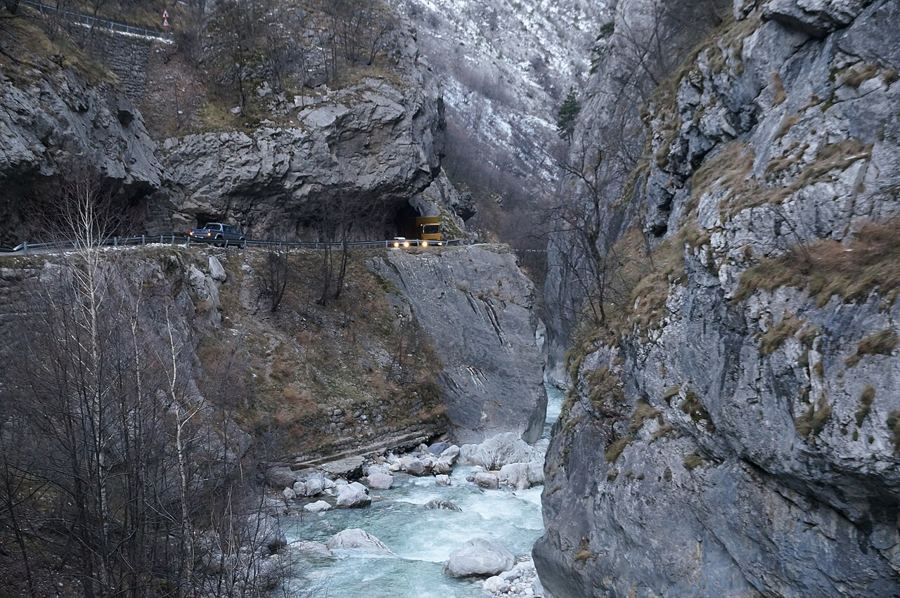 Change here for RugovaHiking the Rugova Canyon into the Accursed Mountains
When to go
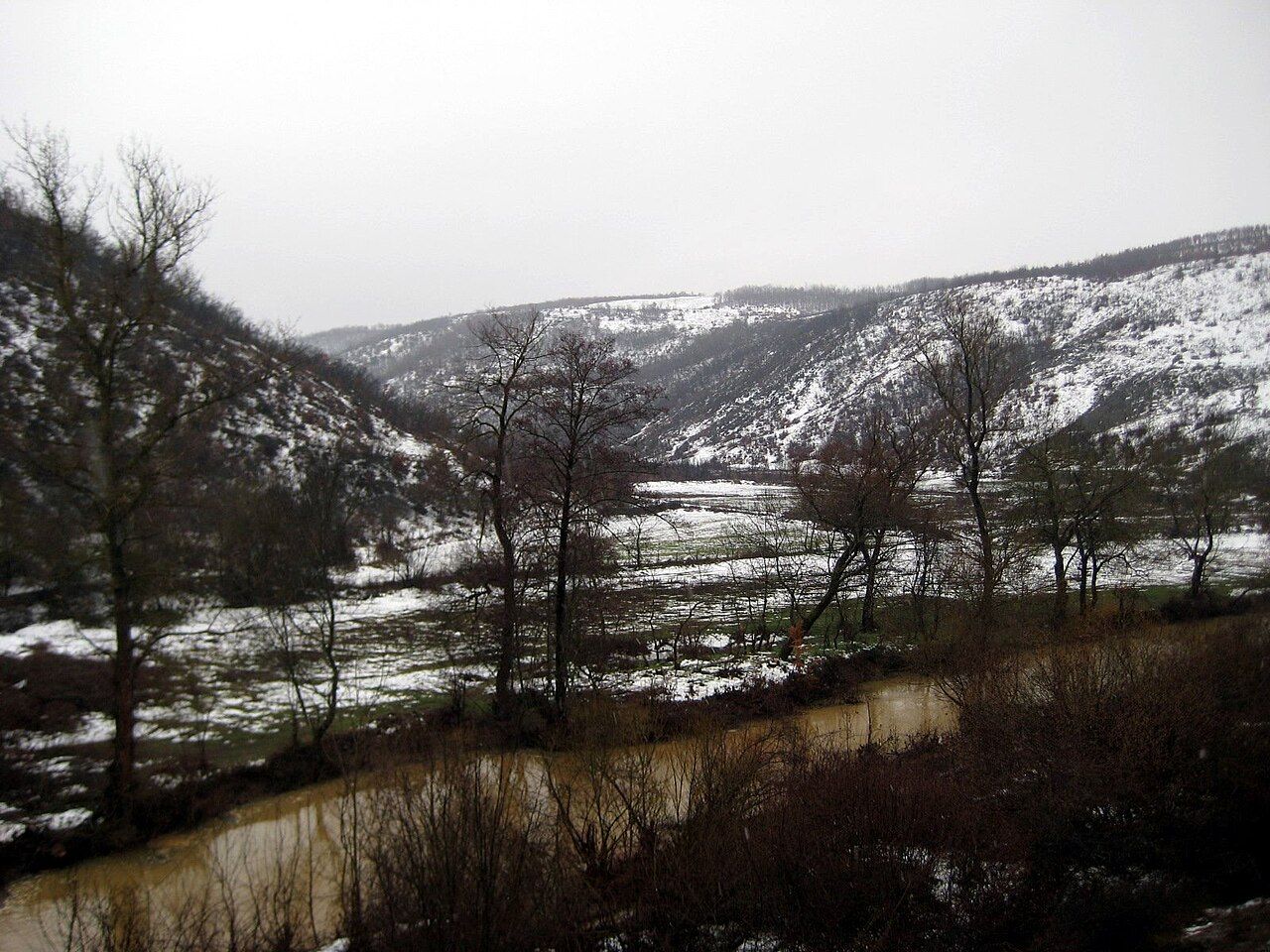
Each season gives a different canyon. Spring, roughly April and May, brings snowmelt and full falls. Summer is the time for swimming, though the flow drops as the weeks go on and the busiest weekends can be crowded. Autumn is quiet, with turning leaves and clear water. In winter the canyon is almost empty, the surrounding hills can be white and the rock is icy, so it suits careful walkers who only want to look.
Weekday mornings are calmest at any time of year. Whatever the season, carry your rubbish out with you: there are few bins, and litter left on the rocks ends up in the pools.
Getting there without a car
There is no dedicated bus to the falls. Regional buses link Pristina with towns in the west of the country, and some routes pass close to the turn-off for Mirusha. Ask at the bus station which departure stops nearest, tell the driver where you want to get off, and expect either a walk along a country road or a short taxi ride from the nearest town to reach the top of the canyon. Timetables and routes change, so check on the day rather than relying on old notes.
Getting back takes more planning than getting there. Note where the bus left you, keep the number of a local taxi if you can get one, and aim to leave the canyon with plenty of daylight to spare.
Fitting it into a route
Mirusha sits roughly in the middle of the country, which makes it easy to fold into a loop through the west. Many travellers stop on the way between Pristina and the old streets of Prizren, or combine it with a few days in Peja and the mountains above it. Another option is to continue to the long market street of Gjakova's old bazaar, which is not far to the south-west.
Pack food and water before you set off. There may be a few seasonal stalls near the road in summer, but you cannot count on them, and a picnic on a warm ledge above the pools is half the point of the day.