
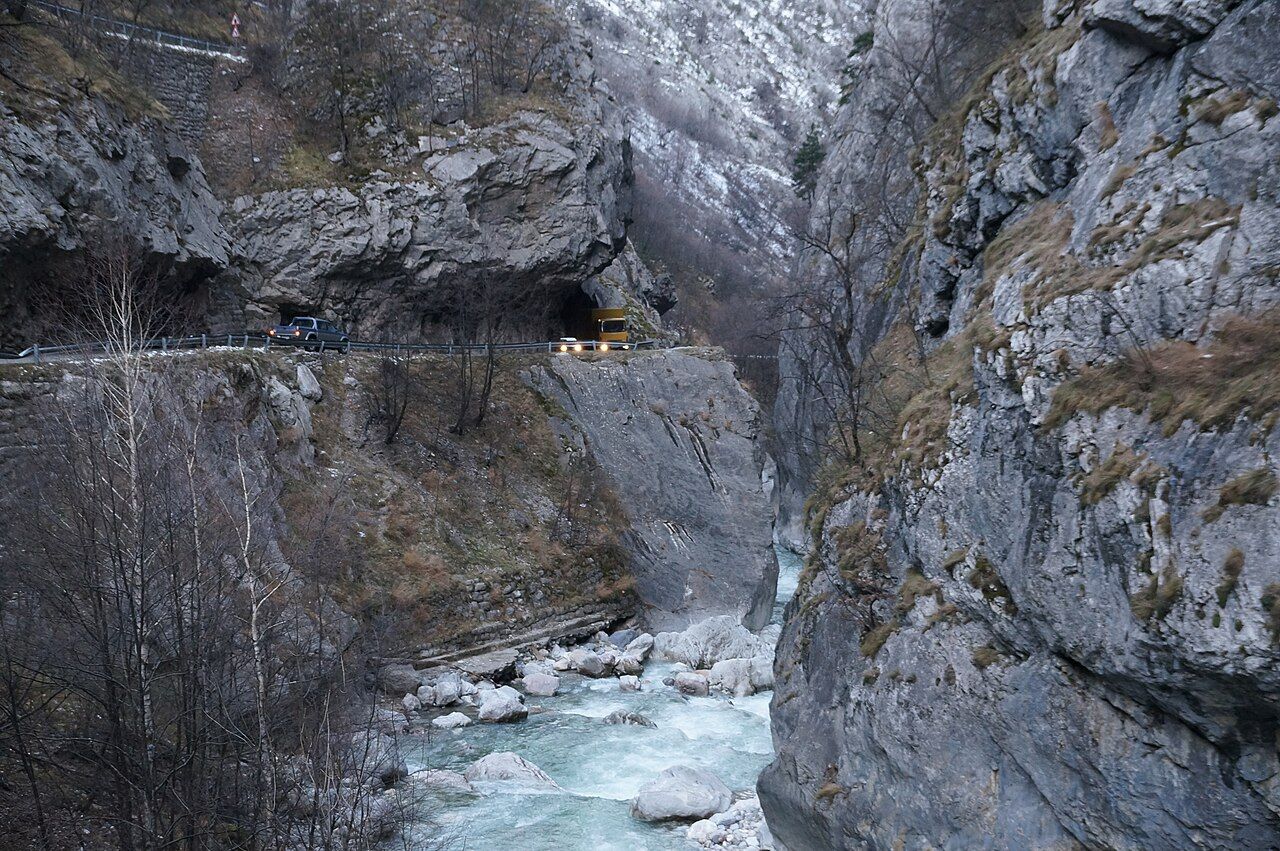
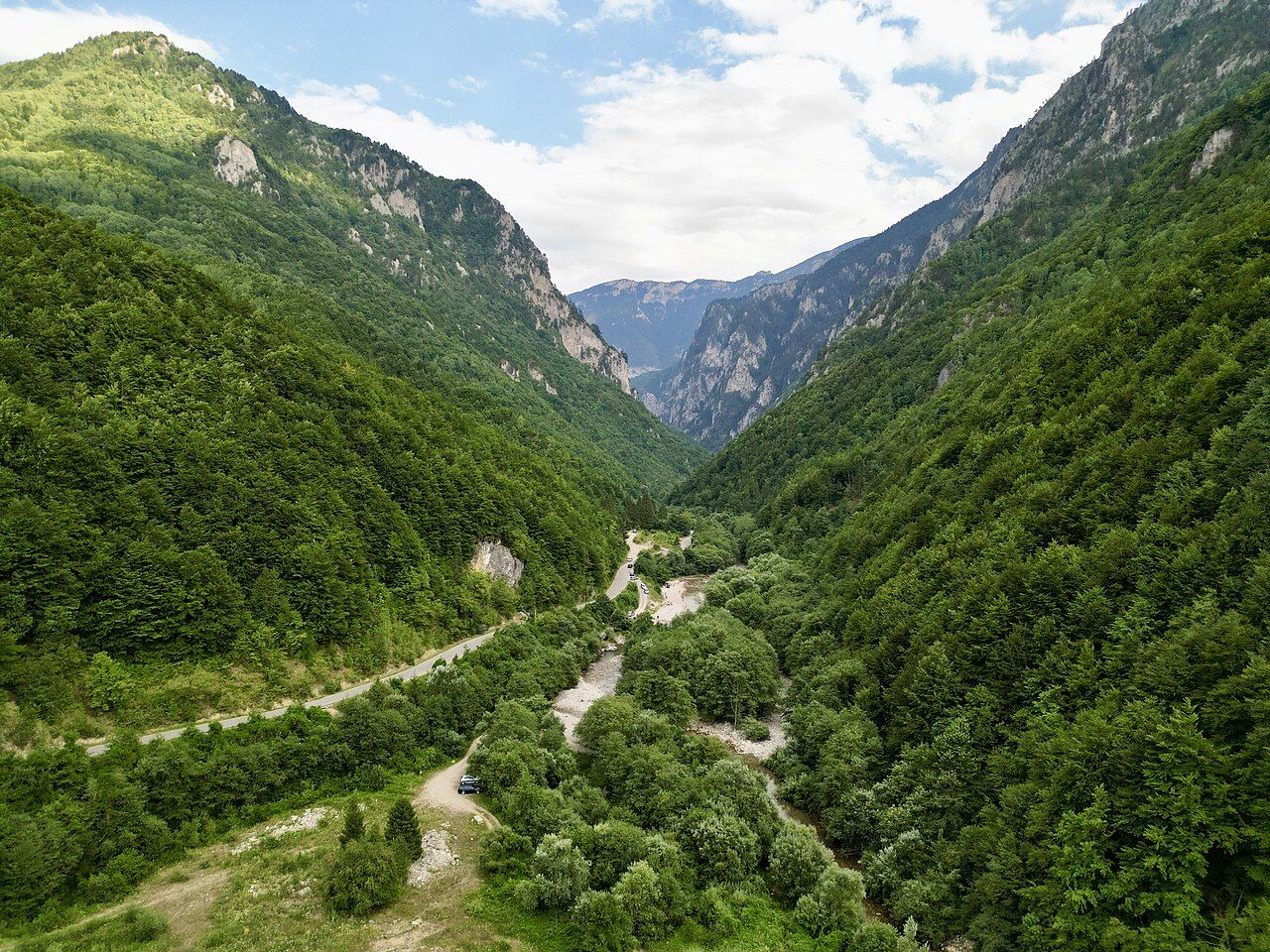
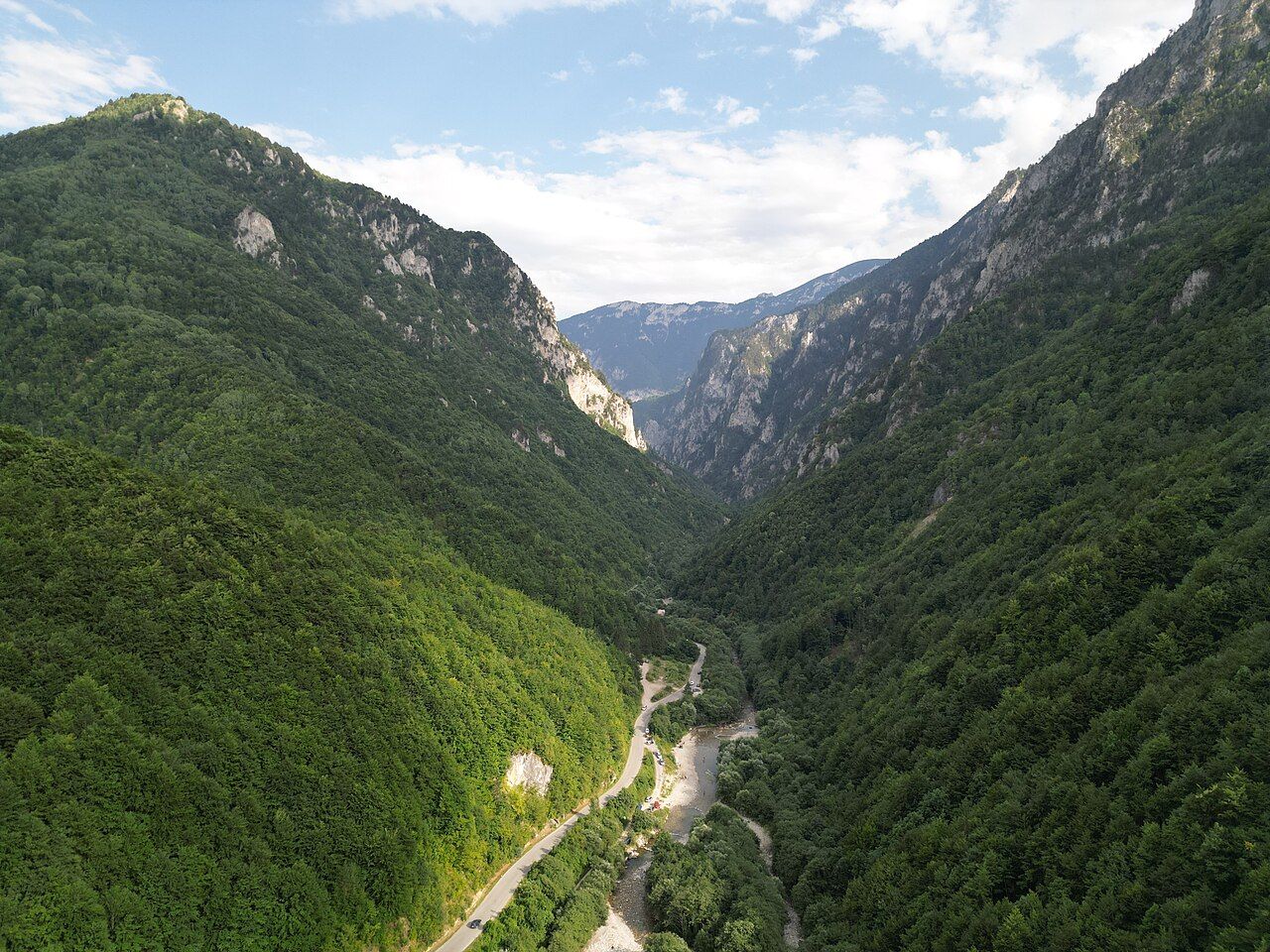
The Rugova Canyon begins just beyond the edge of Peja and runs west into the heart of the Accursed Mountains, the range that Kosovo shares with Albania and Montenegro. In its lower section the gorge is narrow and dramatic: grey limestone cliffs hundreds of metres high, a single road cut into the rock with short tunnels, and the Lumbardhi river crashing below. Higher up, the valley opens into wide pastures, scattered villages and forested slopes beneath bare summits. It is one of the best places in Kosovo for walking, and you can enjoy it on a very small budget.
The gorge road and the tunnels
The road through the gorge is the canyon's main artery and its first attraction. Leaving Peja past the Patriarchate, it follows the river into the narrows, where the walls close in and the road passes through rough-hewn tunnels in the rock. Cars and minibuses use it, so if you walk the lower section, keep to the side, wear something bright and take care in the tunnels, where there is no pavement.
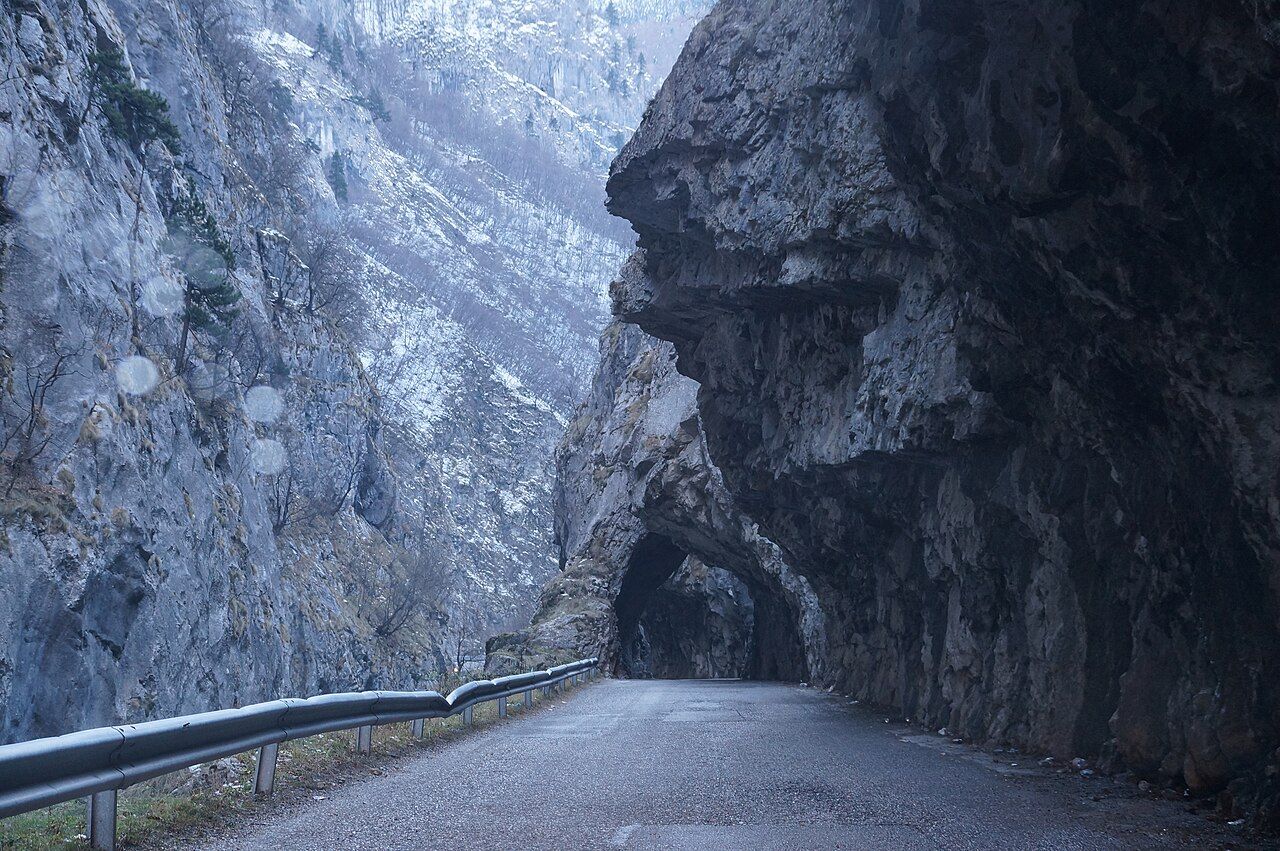
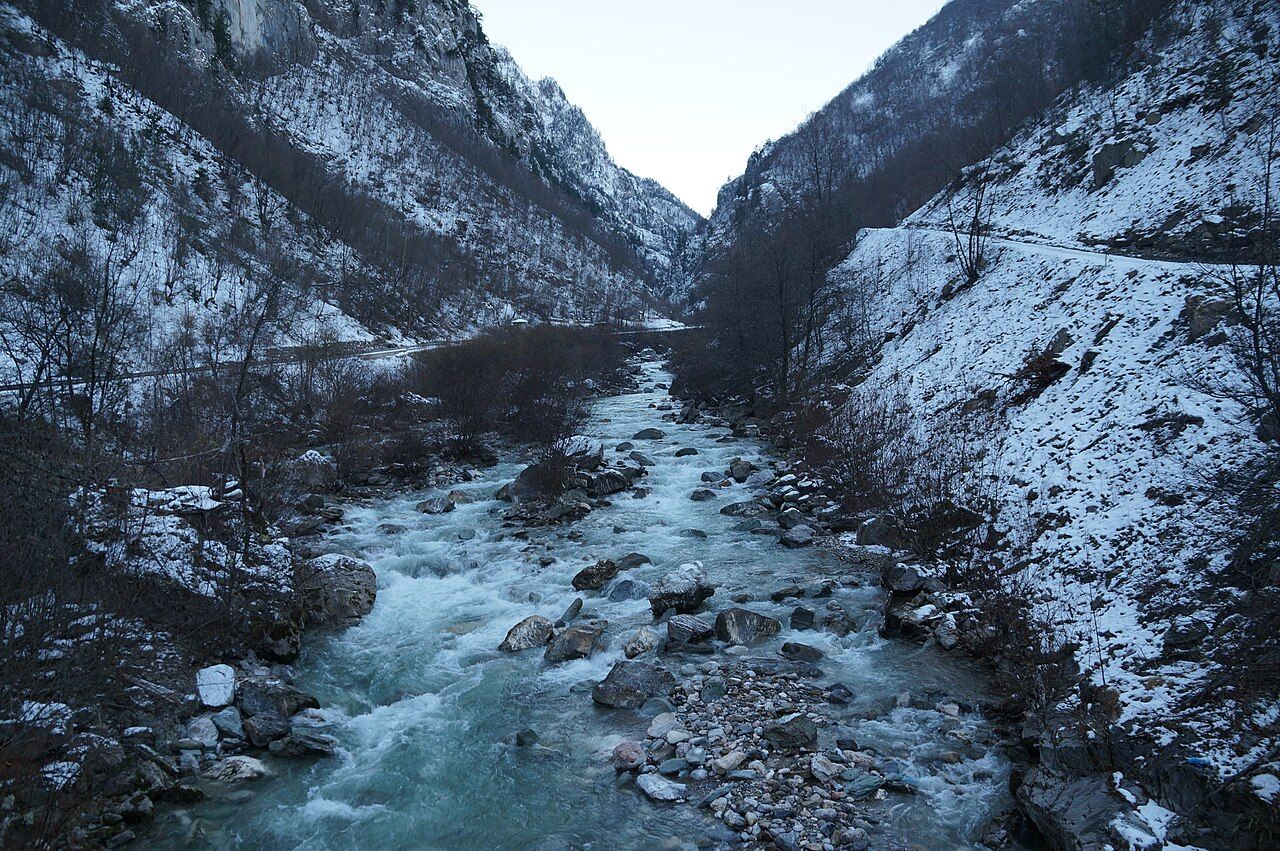
The river is the other star. In spring it runs high and loud with snowmelt, a milky blue-green over white boulders; by late summer it is calmer and clearer. Several places along the road let you scramble down to the water, though the banks are steep and slippery. Do not swim in the fast sections.
Via ferrata, zipline and other activities
The cliffs of the lower canyon carry several via ferrata routes, protected climbing paths with steel cables and rungs fixed into the rock. They range from fairly easy to demanding. If you are not experienced, go with a qualified local guide and hire proper equipment; do not attempt a route with improvised gear.
A zipline across the canyon has also become a popular attraction, giving a fast, high view of the gorge. Opening seasons, safety rules and prices vary, so ask locally in Peja and check before you go. These activities cost more than walking, but they are optional; the canyon is just as rewarding on foot.
- Check the weather before any climb; rain makes rock and cables slippery.
- Make sure helmets, harnesses and lanyards are in good condition.
- Leave your route and your expected return time with someone in town.
Up to the villages and high pastures
Beyond the narrows, the valley widens and the road climbs towards villages scattered across the upper Rugova. Houses of stone and timber sit among meadows and forest, and in summer some families still move livestock up to the high pastures. Guesthouses and simple places to eat exist in several villages; they are often family-run and welcoming, but services are seasonal, so check ahead if you plan to stay overnight.
From the upper valley, trails lead to mountain lakes, ridges and summits. Hajla, on the border with Montenegro, is one of the best-known peaks, with long views on a clear day. The cross-border Peaks of the Balkans trail also passes through Rugova, so you may meet long-distance hikers carrying big packs. Remember that crossing a border on foot in the mountains involves rules and paperwork that change; check current official guidance before you plan any route that leaves Kosovo.
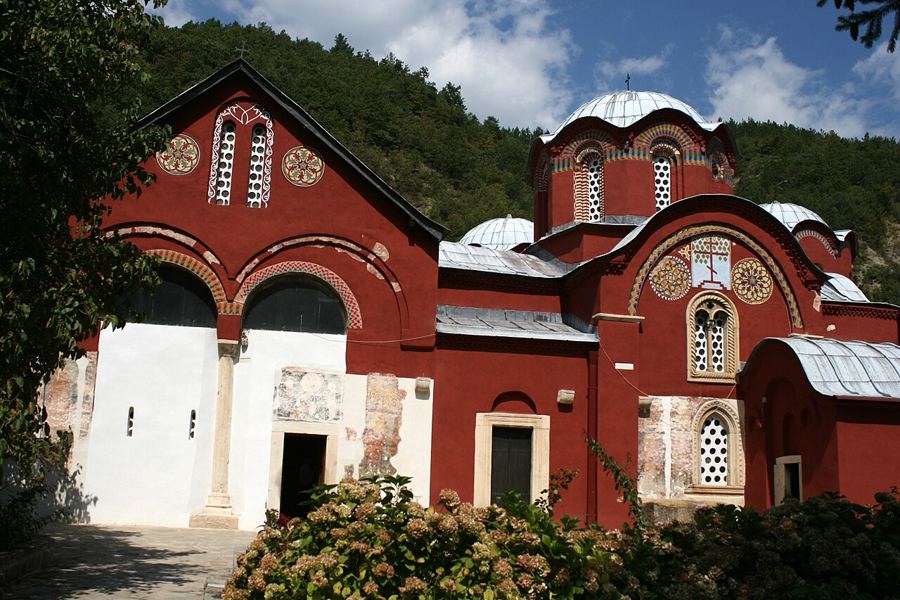 Change here for PejaPeja and the Patriarchate of Peć, where the mountains begin
Planning a day or two
A simple day plan: take an early minibus or taxi from Peja to the upper valley, walk to a lake or viewpoint, then wander back down towards the gorge and catch a ride into town. If you have more time, stay a night in a village guesthouse and do a longer hike the next day.
Trails are marked in places but not everywhere. Download an offline map before you go, carry a paper map if you can find one, and do not rely on phone signal in the high valleys. Paths can be confusing where they cross pastures or forestry tracks.
- Distance. The canyon road is long; plan transport for at least part of it.
- Food and water. Carry snacks and water. Village shops are few and irregular.
- Dogs. Sheepdogs guard flocks in summer. Keep your distance and walk calmly around them.
- Old hazards. Stay on established paths in the mountains, as anywhere in post-conflict areas.
It is one of the best places in Kosovo for walking, and you can enjoy it on a very small budget.
Staying safe and leaving no trace
Rugova is wild country, and help can be far away. Simple habits keep a day out safe and the valley clean.
- Start early and turn back well before dark; the light goes quickly in a deep gorge.
- Wear boots with good grip. Limestone paths are slippery when wet.
- Carry a basic first-aid kit, a head torch and a fully charged phone.
- Take all your rubbish back down with you, and do not light fires in dry weather.
- Close any gates you open, and keep away from livestock with young animals.
Weather turns quickly in the mountains, and a sunny morning can become a wet, foggy afternoon. If clouds build or thunder starts, head down to lower ground rather than pushing on to a summit. There is no shame in turning back, and the valley will still be there next time.
If you are walking alone, leave your route and expected return time with someone in Peja. Mountain rescue exists, but it can take time to arrive in remote valleys.
Weather and seasons
The Accursed Mountains have a mountain climate, and the canyon floor and the high villages can feel like two different seasons. Summer days are warm, but storms build quickly in the afternoon, so start early. Spring brings snowmelt and full rivers, with snow lingering on the high ground into June. Autumn is clear and colourful but short. From late autumn to spring, snow covers the upper valley; some roads may need winter tyres or chains, and some can close. Check road conditions and forecasts before you go.
Whatever the month, pack a warm layer and a rain jacket. Even on a hot day in Peja, the upper valley can be cool and windy.
Getting there
Start from Peja, which is easy to reach by bus from Pristina and other towns. From Peja, local minibuses run up the valley to some villages, though not always often or every day; ask at the bus station or in town and check before you go. Taxis will take you into the canyon for a reasonable fare, especially if you share. Some travellers hitch, which is common in rural Kosovo, but use the usual judgement.
Before or after the canyon, spend time in Peja and at the Patriarchate of Peć. If you want more water and less climbing, the Mirusha waterfalls make a gentler outing elsewhere in western Kosovo.