
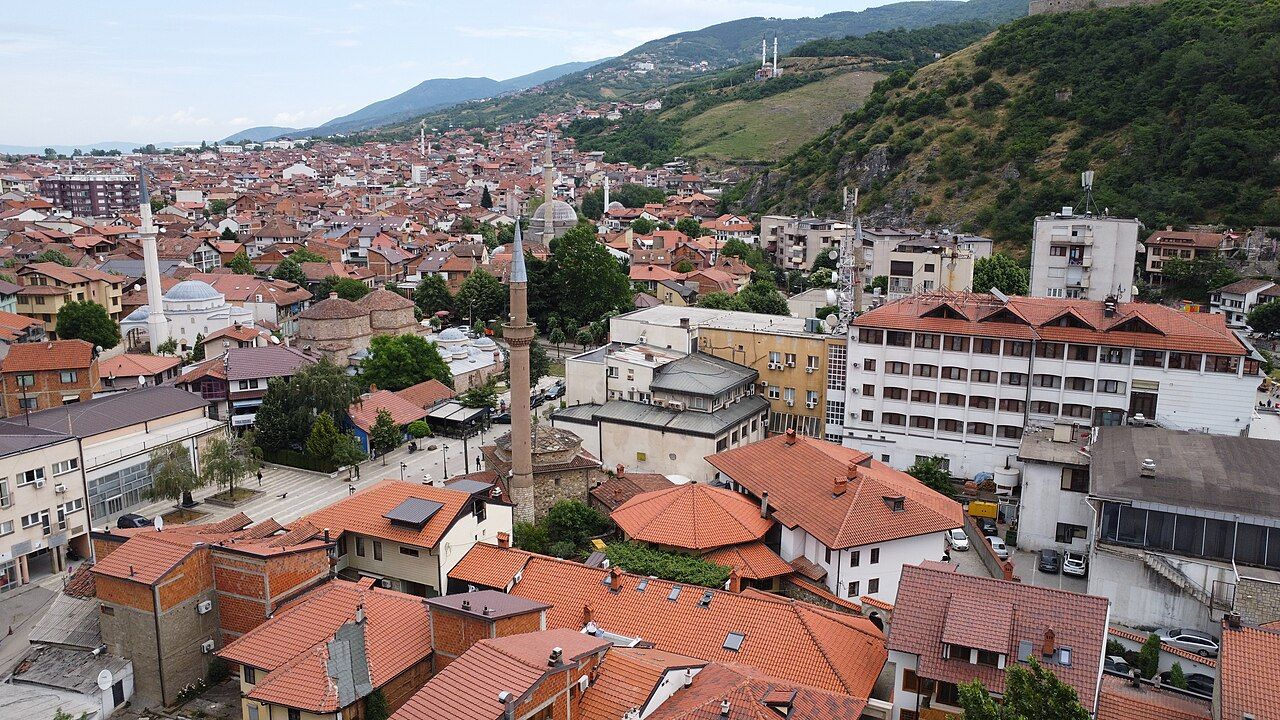
Prizren is the town most travellers remember from Kosovo, and it is easy to see why. Red-roofed houses climb the hillsides on both banks of the Lumbardhi river, minarets and church towers rise between them, and a ruined fortress watches from above. Among the town's landmarks is the Church of Our Lady of Ljeviš, a fourteenth-century Serbian Orthodox church on UNESCO's World Heritage List, a few streets from the Sinan Pasha Mosque and the Ottoman stone bridge. Prizren is compact, walkable and good value, and two days here pass quickly.
In Serbian the town is also Prizren, and you will hear Albanian, Turkish, Bosnian and other languages on its streets; it has long been one of Kosovo's most mixed towns.
Along the river: the stone bridge and Shadërvan
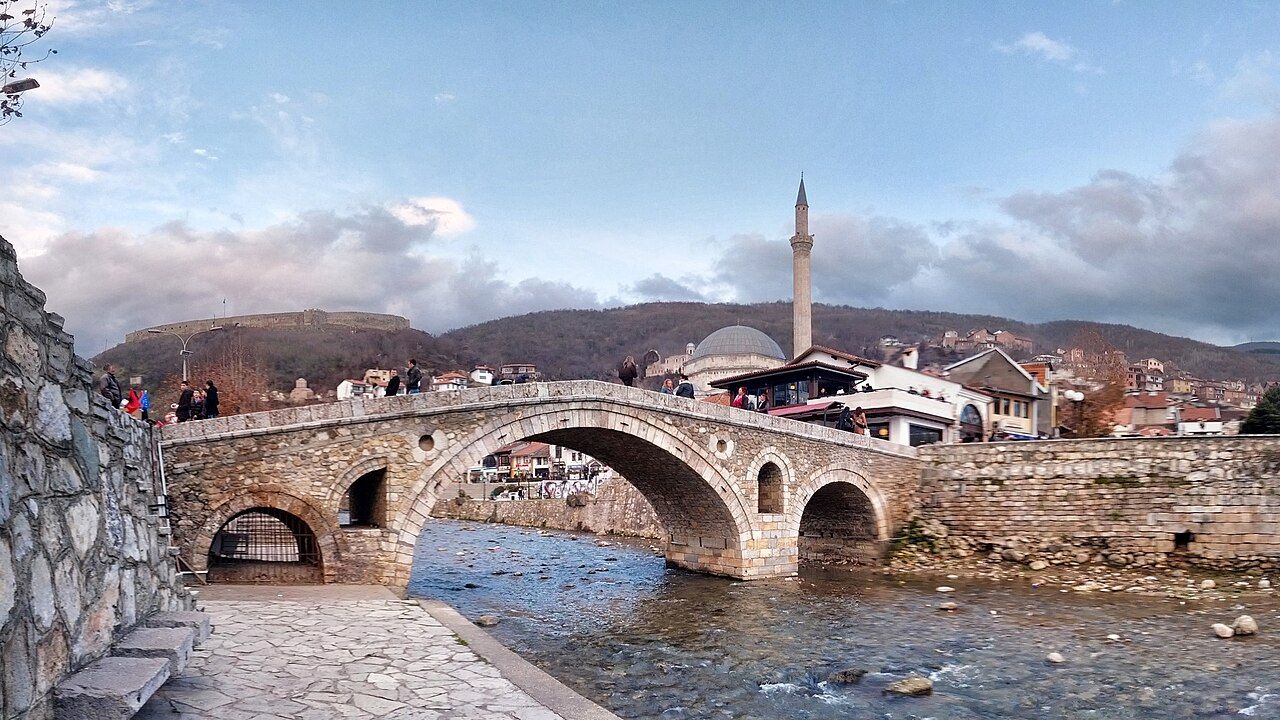
Begin at the old stone bridge, a graceful Ottoman arch over the Lumbardhi (called the Bistrica in Serbian). It was badly damaged by floods in the late 1970s and rebuilt afterwards, and it remains the symbol of the town. Stand on the riverside path just downstream for the classic view: the bridge in front, the dome and minaret of the Sinan Pasha Mosque behind it and the fortress walls on the hill above.
From the bridge, walk a few steps to Shadërvan, the cobbled square at the heart of the old town. Its old fountain gives the square its name, and around it the cafés fill from morning till late. It is the natural meeting point of Prizren and a good place to sit with a coffee and get your bearings.
Mosques, churches and the old quarter
The Sinan Pasha Mosque was built in 1615 and stands right by the river, its tall minaret and lead dome dominating the centre. Inside, painted decoration covers the walls and dome. As with other mosques, you can normally go in between prayers if dressed modestly, with shoes removed.
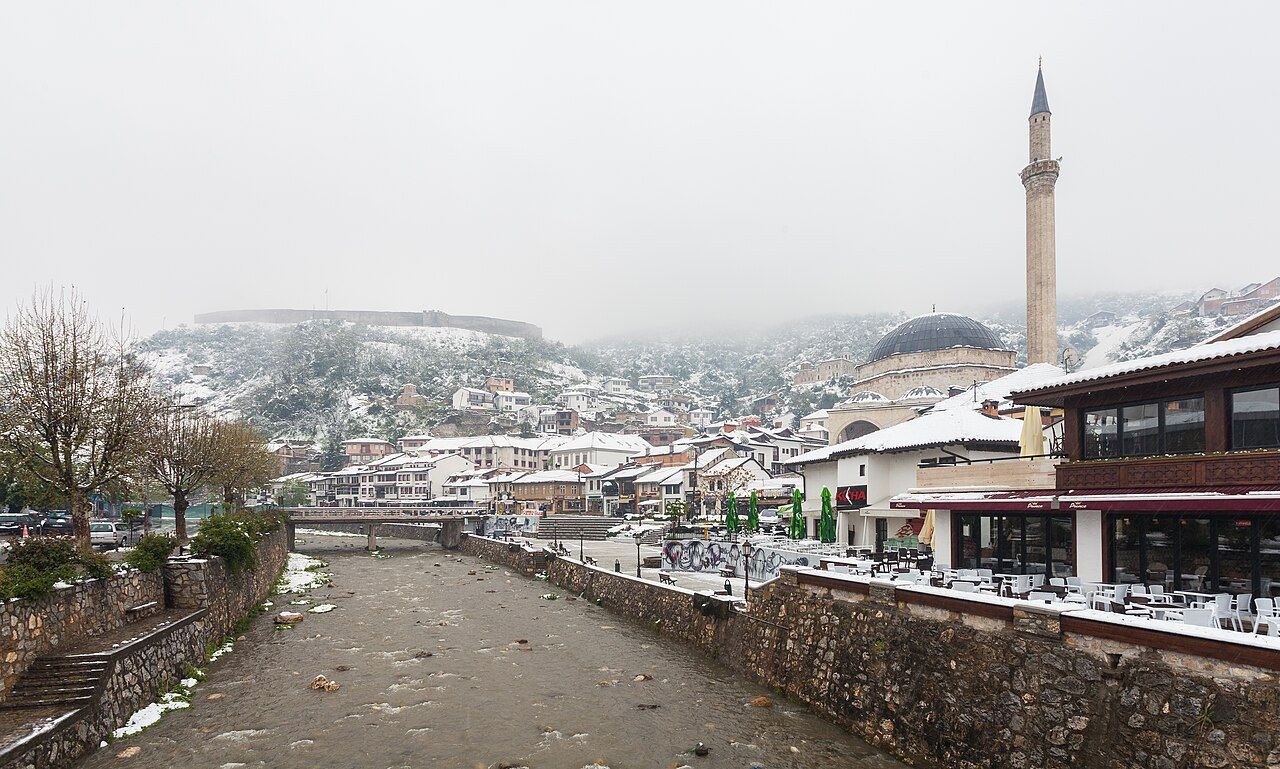
A short walk away stands the Church of Our Lady of Ljeviš (Bogorodica Ljeviška in Serbian). Built on the site of an older church and rebuilt in the early fourteenth century under King Stefan Milutin, it contains important frescoes. In Ottoman times it served as a mosque. It forms part of the UNESCO listing of Medieval Monuments in Kosovo and is on the World Heritage in Danger list. Access to the interior is often limited and arrangements change, so check locally before you go; the exterior can be seen from the street.
Other stops within a few minutes of each other:
- The Gazi Mehmed Pasha Hamam. A large Ottoman bathhouse, restored in recent years.
- The League of Prizren complex. A museum on the site where Albanian leaders met in 1878 to form the League of Prizren, a key moment in Albanian national history.
- The Orthodox Cathedral of Saint George. A nineteenth-century church in the centre.
- The Catholic cathedral. Another reminder of the town's many communities.
Wander the lanes uphill from the river too. The old residential quarter has whitewashed houses with wooden balconies, small workshops and the occasional filigree silversmith, a craft for which Prizren has long been known.
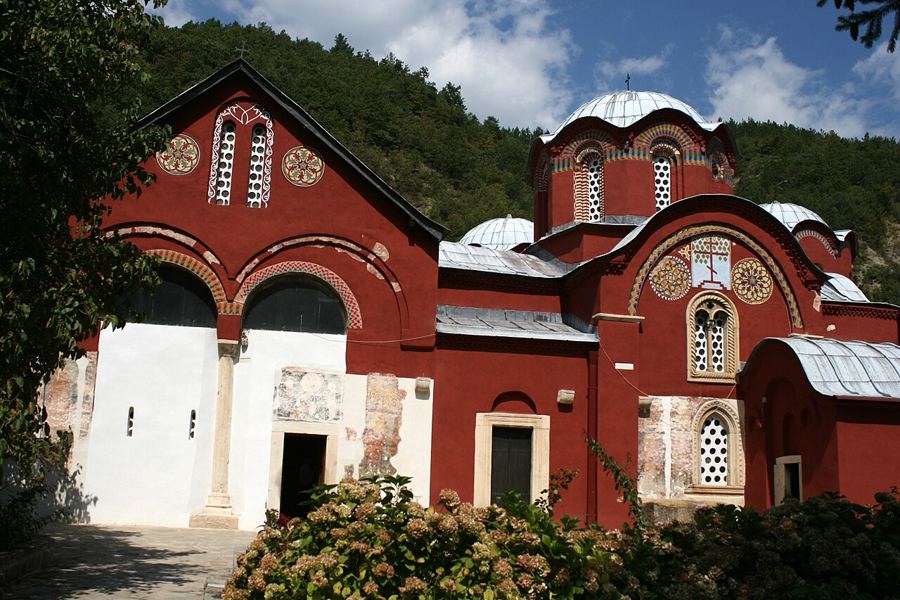 Change here for PejaPeja and the Patriarchate of Peć, where the mountains begin
The fortress climb at sunset
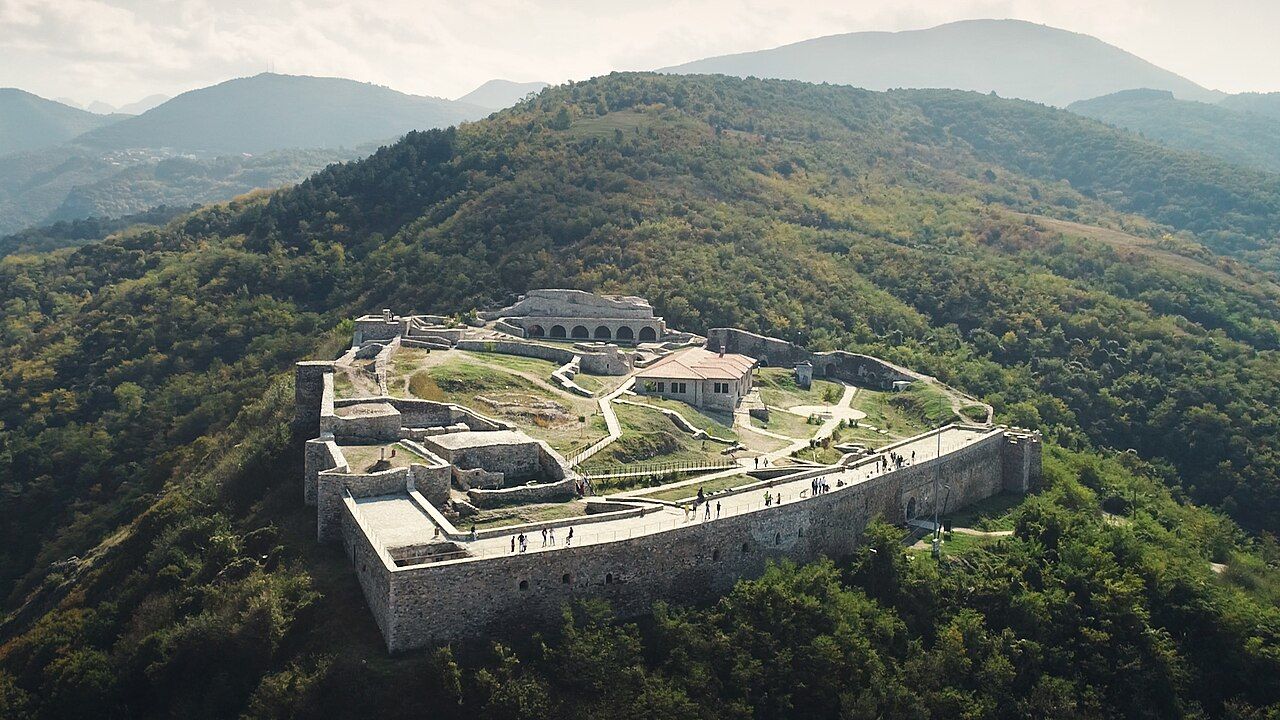
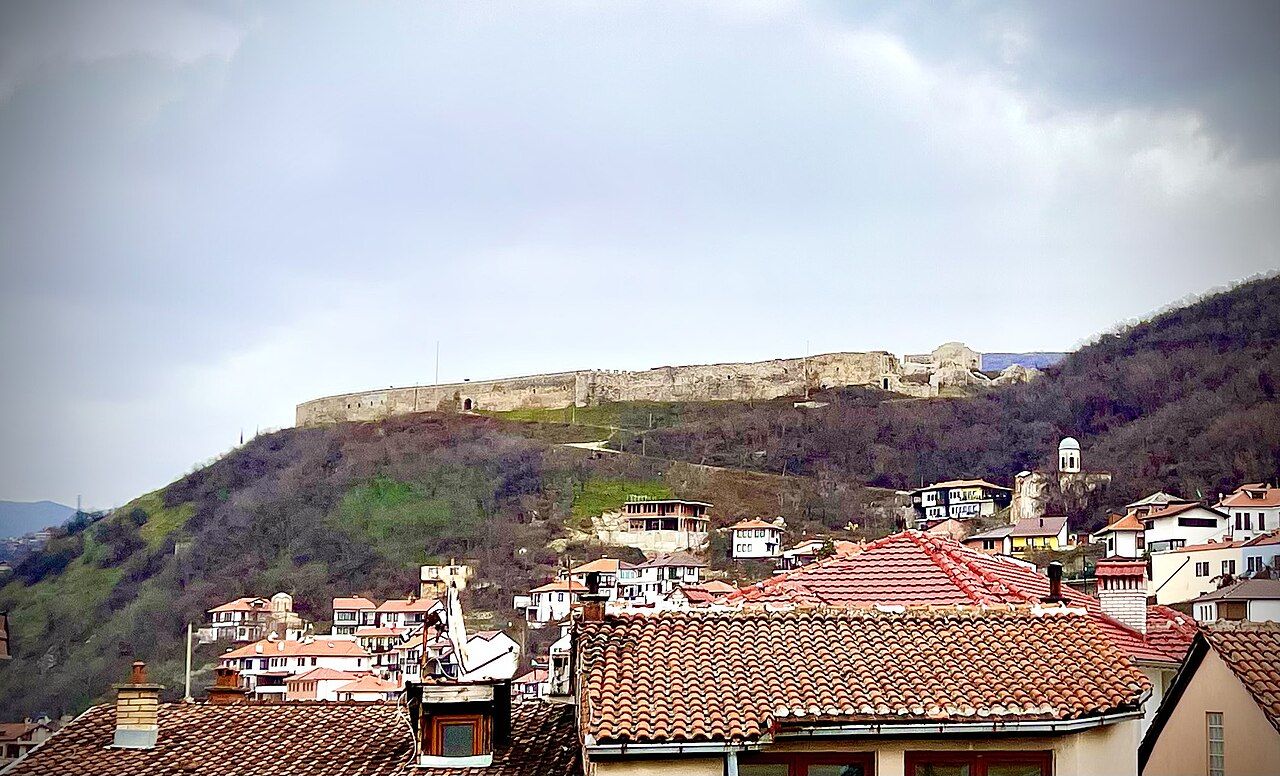
The fortress (Kalaja) crowns the hill above the old town. People have built defences on this site since ancient times, and the walls you see today were extended through the Byzantine, medieval Serbian and Ottoman periods. Restoration work in recent years has added paths and information boards.
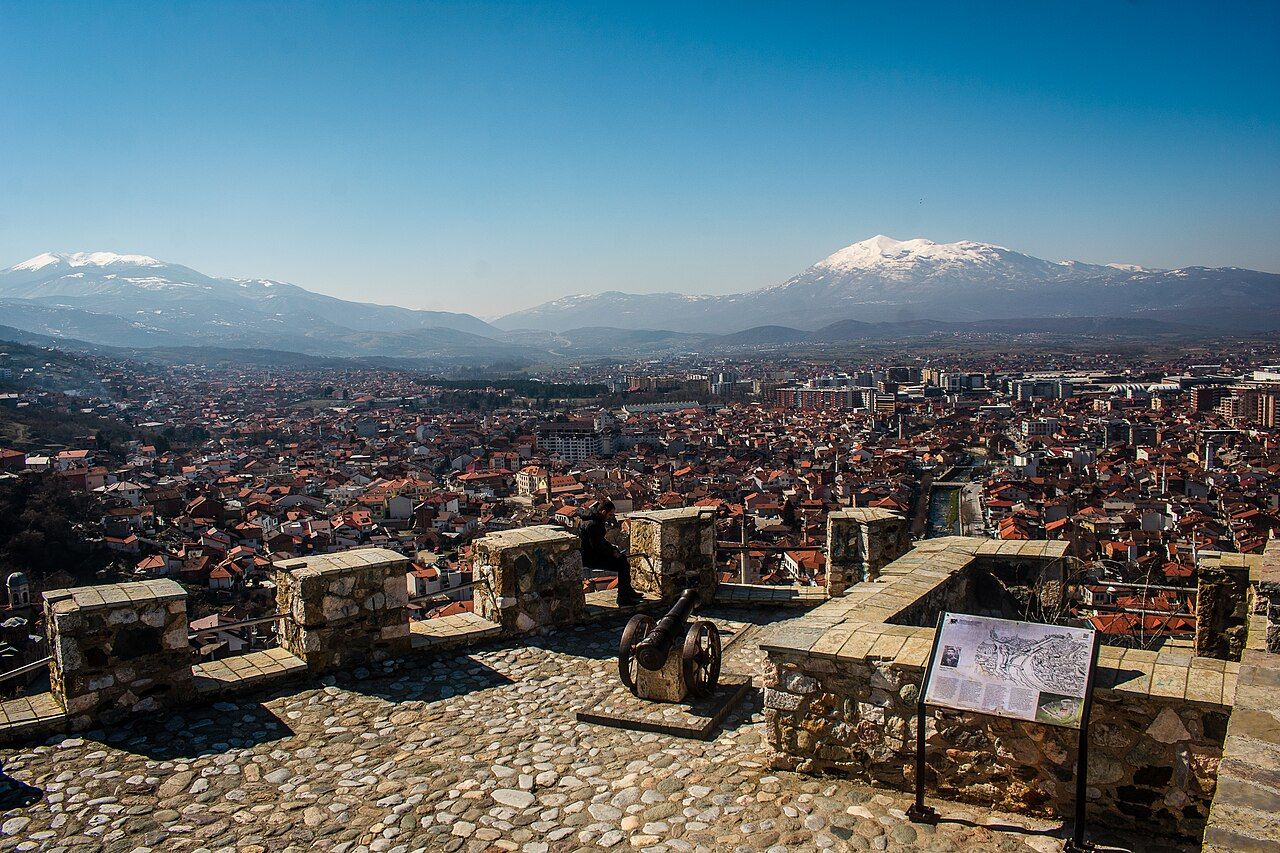
The climb from the centre takes about twenty to thirty minutes on a steep, cobbled lane, passing old houses and small churches on the way. It is not technical, but it is steady going, so wear proper shoes and carry water in summer. At the top you look down over the rooftops, the minarets and the river, with the Sharr Mountains rising to the south and east.
At the top you look down over the rooftops, the minarets and the river, with the Sharr Mountains rising to the south and east.
Go in the late afternoon and stay for sunset. As the light fades, the calls to prayer drift up from the mosques below and the town lights come on one by one. Bring a torch or phone light for the walk down, as some parts of the lane are poorly lit.
Festival season and when to go
Every August, Prizren hosts an international documentary and short film festival that has become one of the region's best-known cultural events. Screenings take place in venues around town, some of them outdoors by the river, and the old town fills with visitors. If you are coming then, accommodation fills early and prices rise, so plan ahead and check the festival dates before you go.
Outside August, late spring and early autumn are the best times: warm days, cool evenings, and fewer people. Summer can be hot in the river valley, and winter is cold, though a snowy Prizren is a fine sight.
Two days in Prizren
One full day covers the main sights, but Prizren rewards a slower pace. A simple plan for two days:
- Day one, morning. The stone bridge, Shadërvan and the Sinan Pasha Mosque, then the lanes of the old quarter.
- Day one, afternoon. The hamam and the League of Prizren complex, a long coffee by the river, and the fortress climb for sunset.
- Day two, morning. The churches of the old town, including the outside of Our Lady of Ljeviš, and the upper residential streets.
- Day two, afternoon. A walk upstream along the Lumbardhi, where the valley narrows into a green gorge with paths on both sides.
The riverside walk upstream is a good escape from the crowds on summer weekends. The water runs cold and clear from the mountains, and small bridges and old mills appear along the way. Turn back whenever you like; the path returns the way it came.
Practical notes
- Getting there. Buses run often between Pristina and Prizren, taking about two hours. There are also connections to Peja, Gjakova, and across the borders to Albania and North Macedonia. Departure times move with the seasons, so ask at the bus station the day before.
- Bus station. It sits a little outside the old town; walk along the river or take a short taxi ride.
- Eating. Grills and bakeries around the centre serve qebapa, burek and pite at low prices. Riverside cafés charge a little more for the view.
- Dress. Cover shoulders and knees for mosques and churches, and carry a scarf.
Prizren pairs well with other western towns. Continue to Gjakova's long old bazaar, or head into the mountains of the Sharr range just south of town. For buses onward, our guide to buses, borders and getting in and out covers the basics.